Termite Treatment
Vaughan, ON
Licensed termite specialists protecting Vaughan homes from subterranean termite colonies. Liquid soil barriers, baiting systems and annual monitoring across Kleinburg, Woodbridge, Maple, Vellore Village, Concord, Thornhill and every Vaughan neighbourhood. Backed by a one-year warranty.
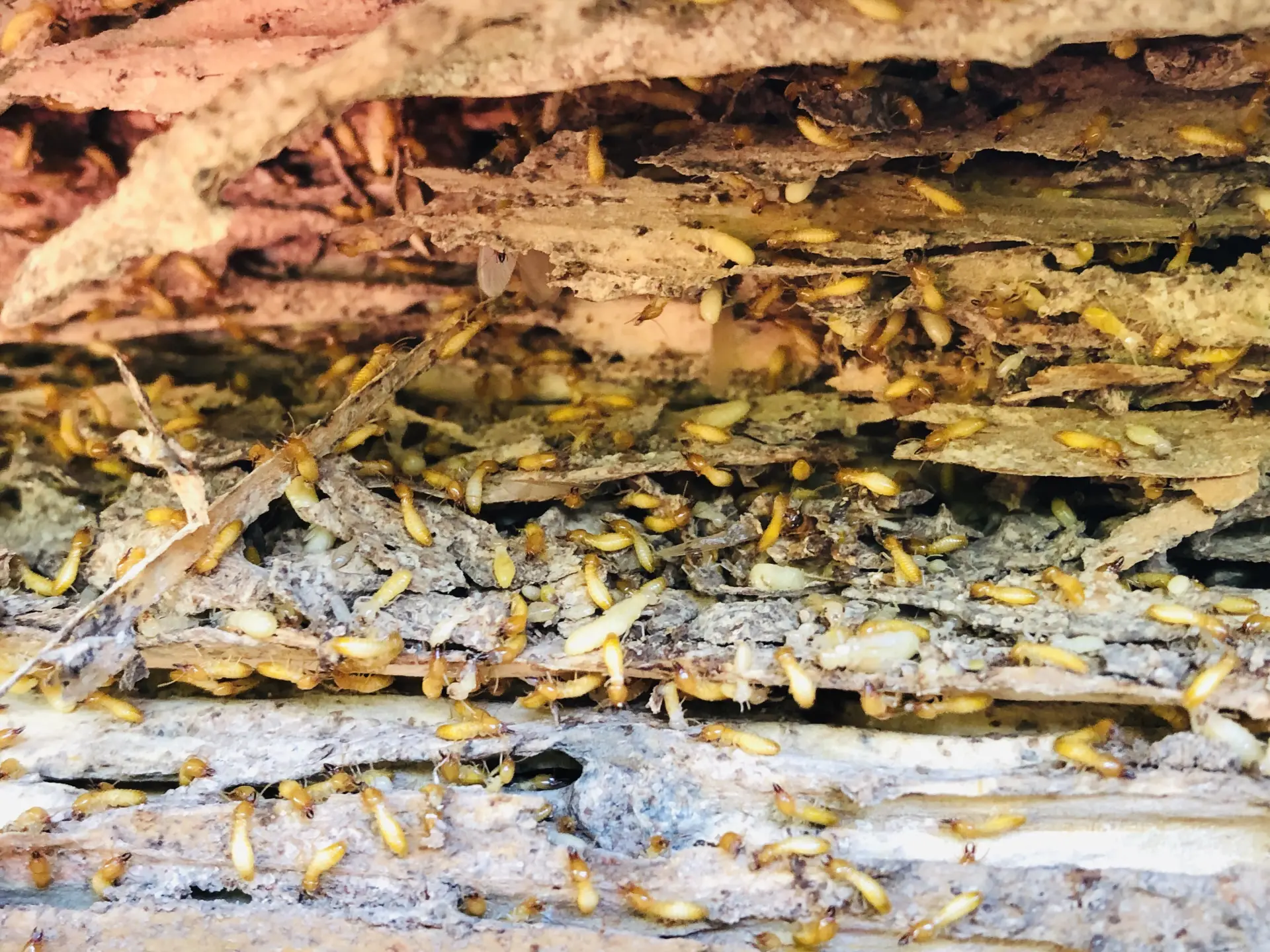
Why Vaughan Homes Face Termite Risk
Vaughan's rapid expansion from agricultural townships into one of Canada's fastest-growing cities has created a complex termite risk landscape. The eastern subterranean termite (Reticulitermes flavipes) is the only termite species established in southern Ontario, and its underground foraging habits make detection notoriously difficult until significant structural damage has already occurred.
Kleinburg's heritage properties — many dating to the 19th and early 20th century — present one of Vaughan's highest termite risk profiles. These older structures often feature wood in direct soil contact: fieldstone foundation sill plates, wood-framed crawlspaces with earthen floors, and exterior wood elements that have settled into grade over decades. The village's proximity to the Humber River valley means seasonally moist soil conditions that favour termite colony establishment and persistence.
Woodbridge properties along the Humber River ravine share similar moisture dynamics. Ravine lots with high seasonal water tables and lush tree canopy create the consistently humid soil environment that subterranean termite colonies require. Landscape timbers used as retaining walls, garden edging and deck footings in Woodbridge are frequent primary infestation points, with colonies later migrating into structural framing.
In newer Maple and Vellore Village subdivisions, buried construction debris is the primary termite risk factor. When new homes are built, organic material — wood scraps, form boards, grade stakes, cardboard and waste lumber — is frequently buried in backfill soil around foundations. Termite colonies may establish in this buried material years before construction is complete, then expand into the home's structural wood five to fifteen years after occupancy, often surprising owners who assume newer construction means lower risk.
Vaughan Termite Risk Factors
- Kleinburg heritage homes with soil-contact wood framing
- Woodbridge Humber River ravine lots with high seasonal water tables
- Maple and Vellore Village buried construction debris in new subdivisions
- Landscape timbers and deck footings in direct soil contact
- Concord and Thornhill 1970s–90s homes with aging wood elements
- Wood-mulch landscaping against foundation walls across Vaughan
- Attached garages with expansion joint wood sill plates at grade
The Hidden Cost of Termite Damage
Subterranean termites consume wood from the inside out, leaving a paper-thin outer shell intact. A mature colony of 60,000 to 250,000 workers can consume the equivalent of a 2x4 stud in approximately five months — often completely invisible from the surface.
Ontario homeowner insurance policies do not cover termite damage, as it is classified as a preventable condition. Vaughan homeowners who discover established infestations typically face both treatment costs and structural repair expenses, making early detection and professional treatment the most cost-effective strategy.
Warning Signs of Termites in Vaughan Homes
Termites are rarely seen directly. Knowing what to look for — especially in Vaughan's older and newer at-risk neighbourhoods — allows you to catch infestations before they become structural crises.
Swarmer Wings
Discarded translucent wings near windowsills, door frames and light fixtures in spring (April–June) indicate reproductive termites have swarmed. Kleinburg and Woodbridge homes near mature trees often see swarmers first.
Mud Tubes
Pencil-thin earthen tunnels running up foundation walls, crawlspace joists, or exposed concrete block are the most definitive termite sign. These protective foraging highways are often found in Vaughan basement stairwells and crawl areas.
Hollow-Sounding Wood
Tap baseboards, door jambs and window casings with a coin or knuckle. A hollow, papery sound where solid wood is expected suggests interior consumption. This is common in Kleinburg heritage baseboards and Woodbridge older framing.
Frass or Pellets
Fine sawdust-like droppings near structural wood may indicate termite activity. Though frass is more common with dry-wood termites, subterranean species leave soil-mixed material near mud tubes. Check along Vaughan basement walls and porch framing.
Buckling Paint or Floors
Moisture produced by termite activity can cause paint to bubble or blister on walls and wood floors to warp or feel spongy underfoot. Maple and Vellore Village homeowners with unexplained moisture issues should consider a termite inspection.
Damaged Landscape Wood
Landscape timbers, deck posts and wooden garden edging in direct soil contact are often the first wood features attacked. Vaughan homeowners with crumbling or hollowed landscape timber borders should have a professional assess whether termites have migrated to the structure.
Vaughan Termite Treatment Methods
Every Vaughan property is different. Our licensed technicians assess your home's structure, soil conditions, and infestation severity before recommending the most effective treatment approach.
Liquid Soil Barrier Treatment
Best for active infestations and high-risk Vaughan properties requiring immediate, comprehensive protection
Liquid soil treatment involves injecting a PMRA-registered termiticide into the soil around the full perimeter of your Vaughan home's foundation. Our technicians drill through concrete walkways, patios and garage slabs at regular intervals, then inject termiticide under pressure to create a continuous chemical barrier at the depth where subterranean termites forage.
The barrier works by eliminating termites that contact the treated zone as they forage between their underground colony and food sources in your home. Some termiticide formulations also transfer between termites through contact and grooming (the "Termidor effect"), allowing the active ingredient to reach deep colony members who never directly contact the treated zone.
This approach is particularly well suited to Kleinburg and Woodbridge properties with established infestations, where immediate containment and colony elimination is the priority. It is also recommended for Maple and Vellore Village new-build homes where buried construction debris is suspected or confirmed.
Liquid Treatment Key Facts
- 5–10 years of protection from a single treatment
- Family and pet safe once soil is dry (2–4 hours)
- Covers full foundation perimeter including garage slab
- PMRA-registered products, Health Canada approved
Termite Baiting System
Best for ongoing monitoring, lower-impact treatment preference, and long-term colony elimination with annual service
The termite baiting system involves installing a network of in-ground monitoring and bait stations at regular intervals around your Vaughan property perimeter. Each station contains a wood or cellulose matrix that is more palatable to termites than structural lumber. When foraging termites discover a station, they recruit colony members and begin feeding — at which point the monitoring matrix is replaced with a slow-acting bait cartridge.
The bait contains a chitin synthesis inhibitor that interferes with the termites' moulting process. Workers carry the bait back to the colony and share it through their normal trophallaxis (food-sharing) behaviour. Colony elimination typically occurs within six to twelve weeks as the inhibitor prevents the colony from sustaining its worker population.
The baiting approach is well suited to Vaughan properties where drilling concrete is not preferred, where structures have complex additions or irregular foundations (common in Kleinburg heritage homes), or where low-chemical-impact treatment is a priority. Annual monitoring visits keep stations active and detect any new termite pressure before colonies establish in structural wood.
Baiting System Key Facts
- No drilling required — minimal property disruption
- Colony elimination in 6–12 weeks
- Annual monitoring protects against re-infestation
- Ideal for Kleinburg heritage and irregular foundation plans
Combined Approach for Maximum Vaughan Protection
Many Vaughan properties benefit from a combined strategy: liquid barrier treatment to immediately address the active infestation and protect the foundation perimeter, paired with perimeter bait stations for ongoing colony monitoring and long-term re-infestation prevention. Our technicians will recommend the optimal combination based on your property's specific structure, soil type, and infestation stage.
What's Included in Vaughan Termite Treatment
Every termite service includes a thorough inspection, complete treatment, and a one-year warranty.
Full Structural Inspection
Licensed technician inspects foundation, crawlspace, basement, garage slab, deck framing, landscape wood features, and attic access points for evidence of termite activity across your entire Vaughan property.
Perimeter Soil Treatment
PMRA-registered termiticide injected at regular intervals around the full foundation perimeter. Includes drilling through concrete walkways, garage slabs, and patios where required to ensure continuous barrier coverage.
Bait Station Installation
In-ground monitoring and bait stations installed at perimeter intervals. Stations are discreet, flush with grade, and designed for annual monitoring visits that keep your Vaughan property protected long term.
Landscape Wood Assessment
Evaluation of deck posts, landscape timbers, wood garden edging, and wood-to-soil contact points. Recommendations provided for reducing ongoing termite risk through structural modifications and material replacement where warranted.
Written Treatment Report
Detailed report documenting inspection findings, areas treated, products applied, and recommendations. Suitable for sharing with real estate agents, mortgage lenders, or buyers as part of a Vaughan pre-purchase or pre-listing disclosure.
1-Year Warranty
All Bugsway termite treatments are backed by a one-year warranty. If termite activity returns within the warranty period we will re-treat your Vaughan home at no additional charge — no questions asked.
Vaughan Neighbourhood Termite Risks
Termite risk in Vaughan varies significantly by neighbourhood age, construction type, soil conditions and proximity to natural features. Our Vaughan technicians understand the specific risk profile of every community we serve.
Kleinburg
Risk: HighHeritage village properties with 19th and early 20th century construction present Vaughan's highest termite risk. Fieldstone foundations, wood-framed crawlspaces with earthen floors, sill plates in soil contact and the proximity of the Humber River valley moisture corridor all contribute to persistent termite pressure. Annual inspections are strongly recommended for all Kleinburg properties.
Woodbridge
Risk: HighHumber River ravine lots in Woodbridge maintain the seasonally moist soil conditions subterranean termites favour. Landscape timbers used as retaining walls on ravine-edge properties are frequent infestation entry points. Older Woodbridge semi-detached and detached homes (1960s–1990s) with wood-framed garages and unfinished basements are at elevated risk.
Maple & Vellore Village
Risk: Moderate–HighRapid construction in Maple and Vellore Village means buried construction debris is a key risk factor — organic material left in backfill soil during the building phase can sustain termite colonies for five to fifteen years before the colony expands into structural framing. Large-lot homes with extensive wood decking, landscape timbers and mulch-heavy landscaping are most at risk.
Concord & Thornhill (Vaughan)
Risk: ModerateConcord and Vaughan's Thornhill communities feature established 1970s to 1990s residential construction where aging wood elements, settled concrete and decades of landscape wood use have created cumulative termite risk. Properties with wood-framed additions, aging deck structures or concrete block foundations showing moisture infiltration warrant professional assessment.
Patterson & Sonoma Heights
Risk: ModerateNewer Patterson and Sonoma Heights subdivisions (2000s–2010s construction) carry the same buried debris risk as Maple and Vellore Village, with infestations typically emerging eight to twelve years after construction. Large homes with three-car garages, expansive decks and substantial wood-mulch landscaping are the primary at-risk properties in these communities.
VMC & Concord New Developments
Risk: Lower–ModerateNew condominium towers and commercial developments near Vaughan Metropolitan Centre carry lower termite risk due to modern concrete and steel construction, though wood-framed townhome units in mixed-use VMC developments remain susceptible. Pre-occupancy pest inspections are recommended for any VMC townhome purchase involving wood-framed party walls and grade-level wood elements.
Our Vaughan Termite Treatment Process
From your initial call to your one-year warranty, we guide you through every step.
Inspection Booking
Call 416-555-5555 or book online. Same-day and next-day appointments available across all Vaughan neighbourhoods.
Full Property Assessment
Licensed technician inspects foundation, crawlspace, garage, basement, and all wood features. Detailed findings and treatment recommendations provided.
Treatment Day
Liquid soil injection and/or bait station installation completed in a single visit for most Vaughan properties. Family and pets can return within 2–4 hours.
Warranty & Follow-Up
One-year written warranty issued. Annual monitoring visits keep your property protected and bait stations active for ongoing colony detection.
What Vaughan Homeowners Say
Real feedback from Vaughan residents who trusted Bugsway with their termite treatment.
"We have a heritage home in Kleinburg village — fieldstone foundation, original wood framing throughout. When we found mud tubes in the crawlspace we were terrified. Bugsway did a thorough inspection and explained exactly what we were dealing with. The treatment was done carefully around our heritage materials and the warranty gave us real peace of mind."
"Found out our Maple home had termites when we went to refinish the basement. The builder had left wood debris in the backfill during construction — our Bugsway technician had seen it before in Maple and Vellore Village. Professional from start to finish, clear report, and no sign of activity at the follow-up. Highly recommend for any newer Vaughan subdivision home."
"Our ravine lot in Woodbridge had termites in the landscape timbers and they had started on a deck post. Bugsway treated the soil perimeter and installed bait stations. The annual check-in visits are really reassuring — knowing someone is monitoring the property each year takes a lot of worry off our plate."
Termite Treatment FAQ — Vaughan
Common questions from Vaughan homeowners about termite inspection, treatment and protection.
Do termites actually live in Vaughan, Ontario?
What are the first signs of termites in a Vaughan home?
How does Bugsway treat termites in Vaughan?
How long does termite treatment last and is there a warranty?
Are termite treatments safe for my family and pets in Vaughan?
Do I need a termite inspection before selling my home in Vaughan?
Serving All Vaughan Neighbourhoods
Termite treatment available across all communities in Vaughan, York Region.