Pavement Ant Control
Toronto & GTA
Pavement ants are Toronto's most common household ant pest — invading kitchens, basements, and patios from underground colonies beneath driveways and foundations. Bugsway eliminates them at the source with treatments that reach the queen.
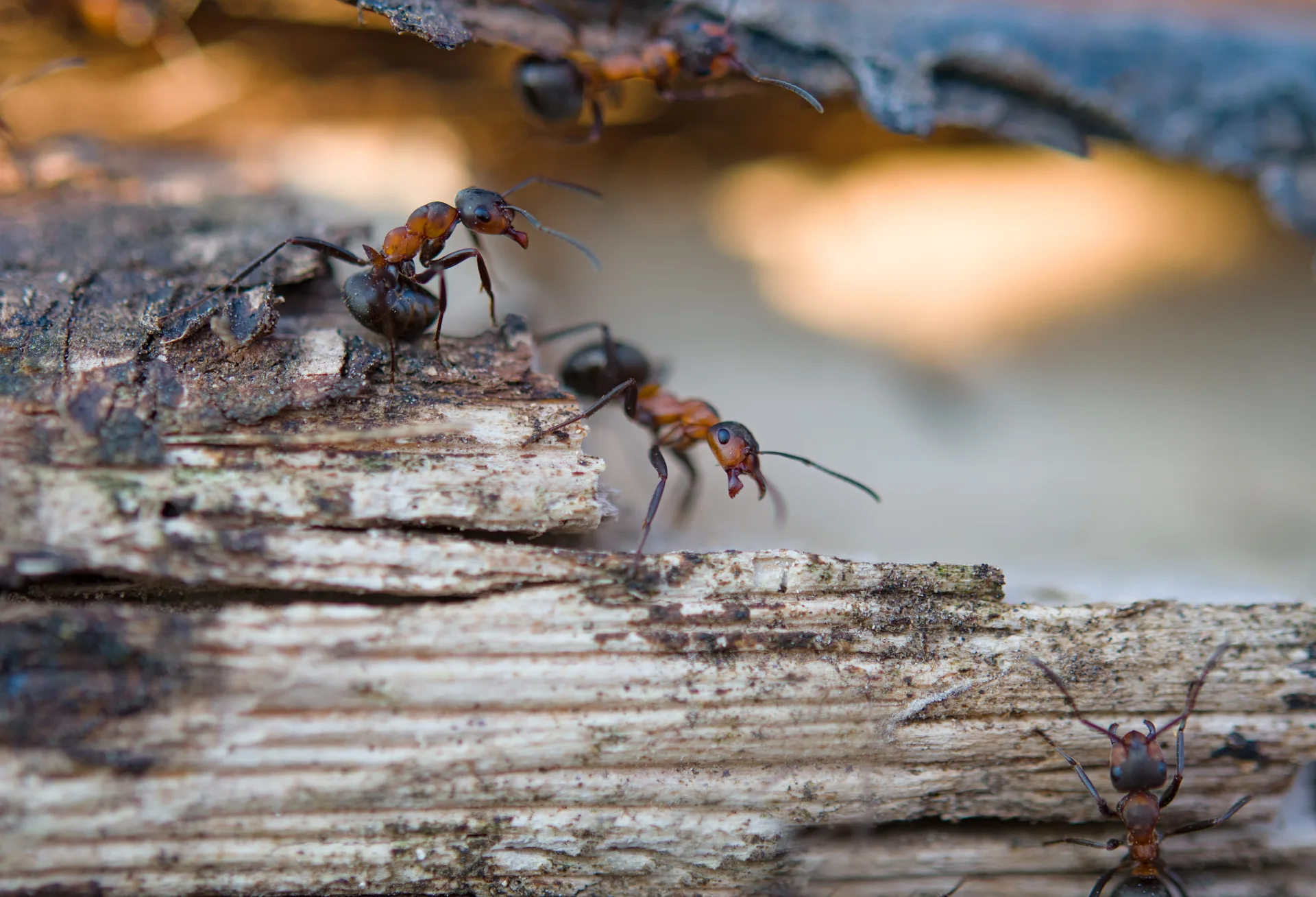
What Are Pavement Ants and Why Are They in Your Toronto Home?
Pavement ants (Tetramorium immigrans, formerly T. caespitum) are small, dark-brown to black ants measuring 2.5–3 mm in length with a characteristic pair of spines on their thorax and parallel ridges (striations) on their head and thorax visible under magnification. Originally introduced to North America from Europe, they are now the most abundant ant species in urban Toronto, thriving in the compacted, heated soils beneath asphalt driveways, concrete sidewalks, stone patios, and building foundations.
In Toronto's densely built neighbourhoods — from Leslieville and East York to Rexdale and Scarborough — pavement ant colonies are nearly ubiquitous beneath paved surfaces. A single colony can contain 3,000–5,000 workers and multiple queens. These colonies forage along established trails that lead into homes through foundation cracks, weep holes, utility penetrations, and gaps under door thresholds. Once inside, workers recruit more nestmates to food sources in kitchens, under appliances, and in basement storage areas.
Toronto's urban heat island effect creates warm pavement and soil temperatures that allow pavement ant colonies to remain active longer into autumn and resume foraging earlier in spring compared to rural areas. This extended activity window means Toronto residents experience pavement ant intrusions from as early as late March through to late October in mild years, with indoor satellite colonies remaining active year-round in heated structures.
According to Health Canada, pavement ants are among the most common structural pest ants in Canada's urban centres, with populations sustained by abundant food sources in residential kitchens and commercial food-handling areas. While they do not pose direct health risks through stings or bites, their food contamination potential makes them a significant concern in food-service and multi-unit residential settings.
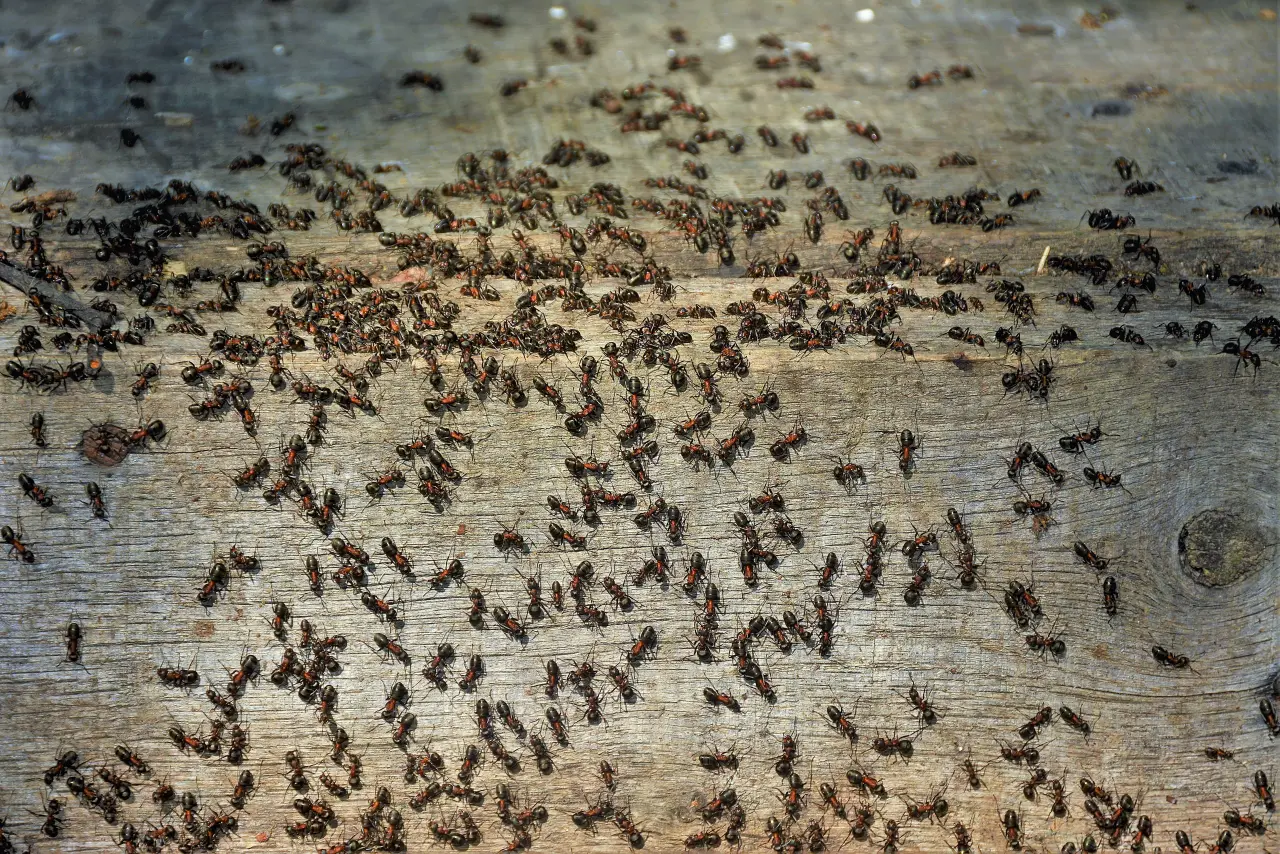
Why Professional Pavement Ant Control Delivers Lasting Results
The most common complaint we hear from Toronto homeowners is: 'I've sprayed everything and the ants keep coming back.' This frustrating cycle is predictable when using retail contact insecticides — killing visible foraging workers does nothing to address the queen or the thousands of workers remaining in underground galleries. Within days, new foragers replace the ones killed, and the trails resume.
Professional pavement ant control breaks this cycle by using two complementary strategies. First, protein-based and sugar-based gel baits are placed at active foraging trails inside the structure. These slow-acting baits attract and are carried back to the nest by workers, where they are shared through trophallaxis and ingested by queens and brood. Elimination of the queen stops worker production entirely. Second, exterior perimeter treatment with a non-repellent residual insecticide creates a transfer zone around the building that intercepts foraging ants from all underground nesting sites beneath adjacent pavement.
Bugsway technicians are skilled at identifying and treating the specific entry points unique to Toronto's residential building types. Pre-war brick homes common in the Danforth, Bloor West, and Junction Triangle areas typically have weep holes in exterior brick veneer that serve as primary ant highways. Post-war bungalows in North York and Etobicoke frequently have cracks in poured-concrete foundations where pavement ant trails are concentrated. Our technicians know where to look and what to do based on decades of experience with Toronto's housing stock.
Beyond treatment, professional pavement ant control includes a complete report identifying structural deficiencies — foundation cracks, open utility penetrations, degraded caulking — that are enabling re-infestation. This actionable information, which DIY products cannot provide, helps homeowners make targeted repairs that reduce the risk of future infestations and can also be valuable for home insurance assessments.
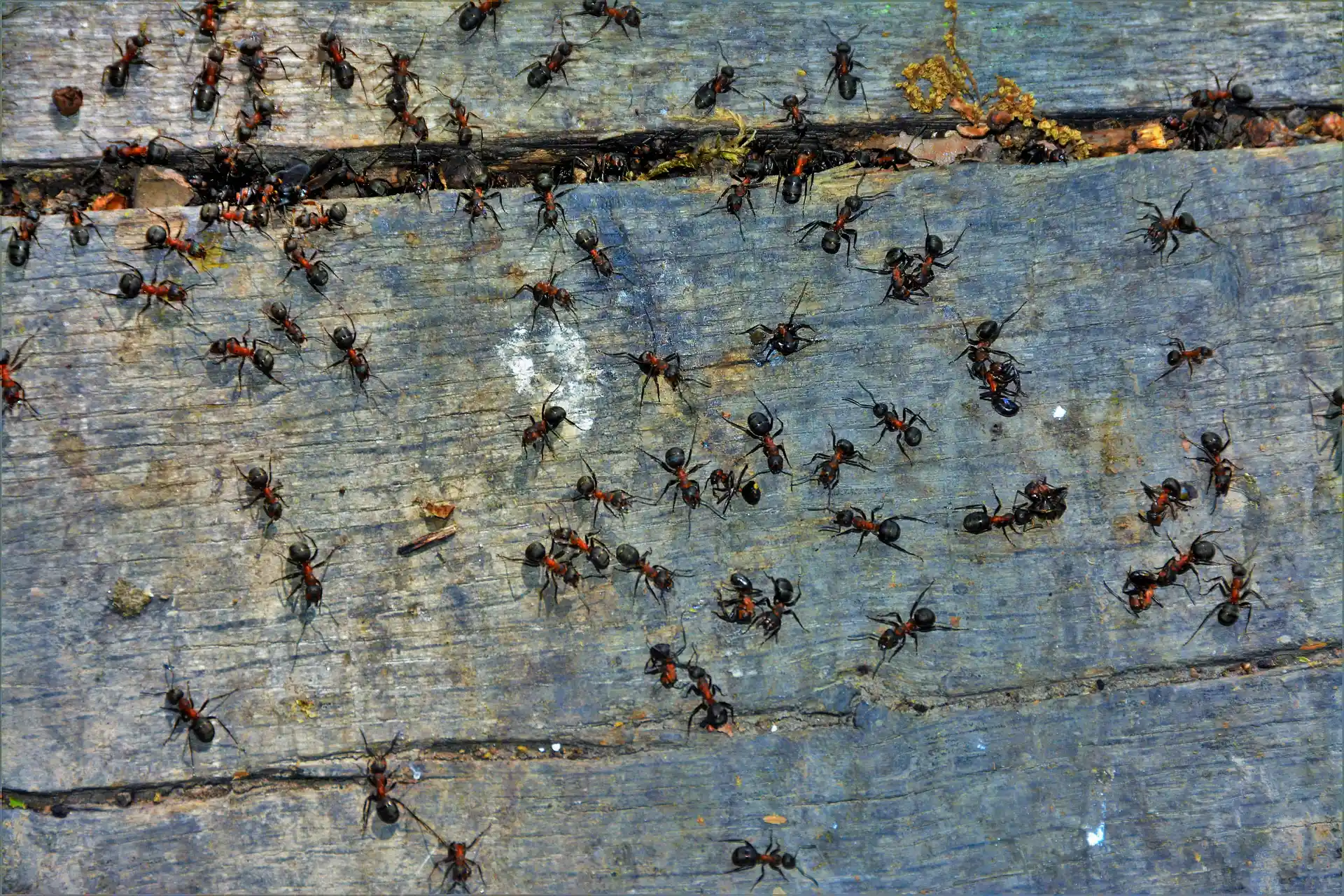
What's Included in Our Pavement Ant Control Service
Interior Bait Placement
Protein and sugar gel baits placed at all active interior foraging trails, targeting workers that carry bait back to queens and brood for colony-wide elimination.
Exterior Perimeter Spray
Non-repellent residual insecticide applied around the full building foundation, including entry points, cracks, weep holes, and utility penetrations.
Crack & Crevice Treatment
Targeted insecticide dust and gel injection into foundation cracks, expansion joints, and gaps under door thresholds where pavement ant trails concentrate.
Entry Point Documentation
Written report identifying all structural deficiencies enabling ant entry, with specific repair recommendations to prevent re-infestation long-term.
Follow-Up Assessment
Complimentary follow-up visit 3 weeks post-treatment to confirm colony elimination and apply supplemental bait if any residual trail activity is observed.
60-Day Written Guarantee
All pavement ant treatments are backed by a written 60-day re-treatment guarantee. If ants return, we return at no extra charge — no questions asked.
Tired of Ants Invading Your Kitchen and Patio?
Bugsway eliminates pavement ant colonies at the source — not just the foragers you can see. Book today for fast, lasting results.
Our Pavement Ant Control Process — Step by Step
Step 1 — Booking & Scheduling: Call 416-555-5555 or complete our online form to schedule service. We serve all Toronto neighbourhoods and GTA communities seven days a week with flexible morning, afternoon, and evening windows. Same-day appointments are available for urgent infestations.
Step 2 — Interior Trail Inspection: Our technician systematically inspects kitchen cabinets, appliances, baseboards, utility rooms, and basement areas to identify all active foraging trails and any interior satellite nest sites. We trace trails back to primary entry points at the foundation to understand the full scope of the infestation.
Step 3 — Bait Placement: Gel baits are placed at all active trail locations using bait stations that protect the product from children and pets while allowing ant access. We use both protein-based and carbohydrate-based bait formulations because pavement ant preference shifts seasonally — matching bait type to current worker needs dramatically accelerates uptake and colony transfer.
Step 4 — Exterior Perimeter Treatment: A non-repellent residual insecticide is applied around the full perimeter of the building, treating foundation walls, door thresholds, window wells, and all identified crack and crevice locations. This exterior treatment intercepts foraging ants before they enter the structure and works synergistically with the interior bait programme to eliminate colonies from multiple directions.
Step 5 — Client Education & Prevention Guidance: We walk you through the post-treatment process, explain what to expect over the following weeks, and provide specific recommendations for sanitation, exclusion repairs, and moisture management that will reduce ant pressure long-term. A written service report documents all treatment zones, products used, and follow-up scheduling.
Pavement Ant Control Pricing in Toronto
Affordable, effective pricing for Toronto homes and businesses. All prices include follow-up assessment and HST.
Condo, townhouse, or small detached home
- Interior trail inspection
- Gel bait placement
- Exterior perimeter spray
- Service report
Larger detached home or persistent infestation
- Everything in Standard
- Crack & crevice injection
- Follow-up visit included
- 60-day written guarantee
Why Choose Bugsway for Pavement Ant Control in Toronto
Bugsway has resolved thousands of pavement ant infestations across Toronto and the GTA since 2009. Our team knows that every Toronto neighbourhood presents unique pavement ant challenges — the dense row housing of East York creates shared colony networks that move between adjacent properties, while the large interlock driveways common in Vaughan and Markham provide vast nesting habitat that requires a different approach than a small urban lot.
We offer Toronto residents the highest level of transparency in the industry. Before any treatment is applied, your technician explains exactly what they found, what products they're using (by brand name and PMRA registration number), why those products were selected, and what results to expect over the following weeks. You'll never receive a vague promise to 'get rid of the ants' — you'll receive a detailed service plan with documented, verifiable outcomes.
Bugsway is fully licensed under Ontario Regulation 63/09 and complies with all Toronto and GTA municipal pesticide restrictions. In neighbourhoods where cosmetic pesticide use is further restricted by city bylaws, we have approved alternative IPM protocols using mechanical exclusion, borate-based baits, and food-grade diatomaceous earth applications that are compliant with all local regulations. We stay current with all regulatory changes so you don't have to.
For a complete picture of our ant control capabilities, visit our ant control overview page. We also offer carpenter ant removal for structural infestations and fire ant treatment for aggressive stinging ant species in your yard.
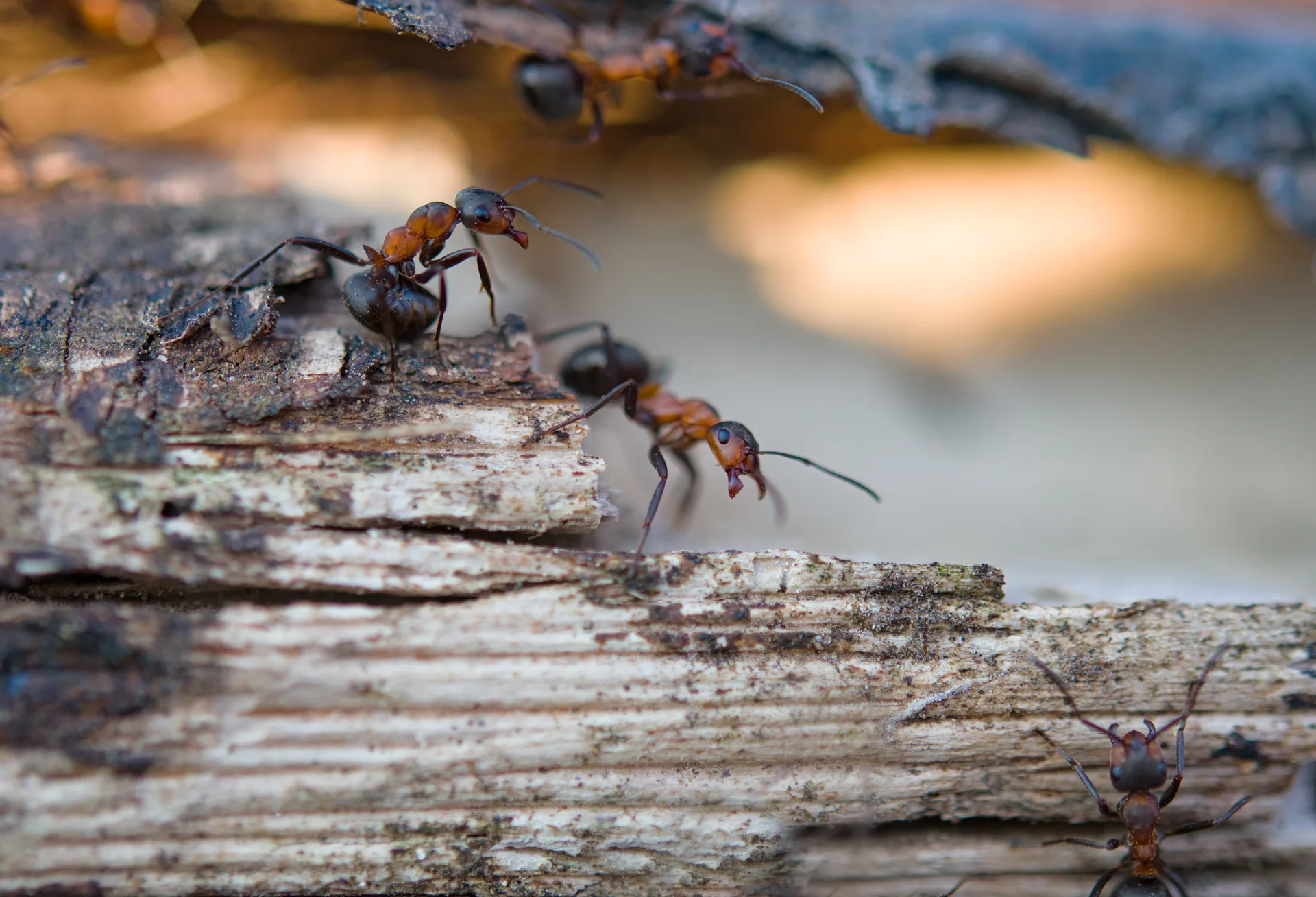
Stop the Ant Cycle for Good
Professional pavement ant control with a 60-day guarantee. Serving all Toronto neighbourhoods and GTA communities.
Related Ant Control Services
Carpenter Ant Removal
Structural carpenter ant elimination with thermal inspection, void treatment, and 60-day guarantee.
Learn MoreFire Ant Treatment
Two-phase bait and mound drench treatment for European fire ants in Toronto yards and green spaces.
Learn MoreAll Ant Control Services
Browse Bugsway's complete Toronto ant control programme for all species and property types.
View AllPavement Ant Control — Frequently Asked Questions
What are pavement ants?
Pavement ants (Tetramorium immigrans) are small dark-brown to black ants, 2.5–3 mm long, that build nests under driveways, sidewalks, patios, and building foundations. They are the most commonly encountered ant species in Toronto homes, frequently invading kitchens and basements from spring through fall in search of food and moisture.
Why do pavement ants keep coming back?
Pavement ants return because retail sprays and DIY treatments kill foraging workers without reaching the queen deep underground. Colonies typically nest 30–90 cm below the surface under concrete or interlock. Until the queen is eliminated, workers are continuously replaced. Professional treatment uses slow-acting bait and non-repellent products that reach and eliminate the entire colony structure.
Are pavement ants harmful?
Pavement ants do not bite or sting humans and do not transmit disease directly. However, they contaminate food by walking over surfaces and food items, and large colonies can undermine interlock paving and concrete by removing sand and soil from beneath. In kitchen environments, especially in food service settings, they represent a food safety and regulatory compliance concern.
When do pavement ants swarm in Toronto?
Pavement ants produce winged swarmers typically in June and July in Toronto. Swarms often occur on warm sunny days following rain and can involve thousands of flying ants emerging from cracks in pavement or foundation walls. Indoor swarms — finding flying ants inside your home — are a sign of a large colony with satellite nests inside the structure requiring immediate treatment.
How do pavement ants get into my house?
Pavement ants enter homes through foundation cracks, gaps around plumbing penetrations, weep holes in brick veneer, gaps under door thresholds, and along utility conduits. In Toronto townhomes and semi-detached houses, shared foundation walls allow colonies to spread from adjacent properties. Once inside, ants establish satellite nests in wall voids, insulation, and under kitchen appliances.
How long does pavement ant treatment take to work?
Gel bait treatments show results within 1–2 weeks as workers carry the slow-acting bait back to the queen. Exterior perimeter spray creates an immediate reduction in visible activity within 24–48 hours. Full colony elimination including underground queens typically takes 2–4 weeks. We follow up at 3 weeks to confirm success and provide supplemental treatment if needed.
Can I prevent pavement ants from returning?
Prevention involves sealing foundation cracks, caulking gaps around pipes and wires, repointing cracked mortar, removing debris and firewood from foundation perimeters, and ensuring proper drainage away from the building. Annual spring perimeter treatments create a residual barrier before colonies establish active foraging trails into your home. Our technician will document specific recommendations for your property.
Do you treat pavement ants in apartment buildings and condos?
Yes. Bugsway regularly works with property management companies across Toronto to treat multi-unit residential buildings for pavement ant infestations. We coordinate unit-by-unit inspections and treatments to address building-wide infestations comprehensively, providing management reports for building records, board documentation, and insurance purposes.
Get Rid of Pavement Ants Today
Serving Toronto, Scarborough, North York, Etobicoke, Mississauga, Brampton, Markham, and all GTA communities. Same-day appointments available.
Understanding Pavement Ant Biology and Behaviour
Pavement ants (Tetramorium caespitum) are one of the most common household ant species in Toronto and throughout the GTA. They are small (2-3mm), dark brown to black, with parallel grooves on their head and thorax visible under magnification. Their name comes from their preference for nesting in and under pavement — driveways, patios, sidewalks, and building foundations. Colonies typically contain 3,000-5,000 workers with a single queen, and foragers travel up to 30 metres from the nest in search of food. They are omnivorous and attracted to sweets, starches, and protein — making kitchens and pantries primary targets.
Pavement ants are perennial — the same colony persists year after year, becoming increasingly established with time. They overwinter in the nest (dormant below the frost line) and become active again in spring as soil temperatures rise. The characteristic pavement ant mounds — small piles of soil pushed up through cracks in driveways and between patio stones — are most visible in spring and early summer. Ant battles between competing colonies (large masses of fighting ants on pavement) are a distinctive pavement ant behavior seen in late spring, indicating multiple mature colonies in close proximity.
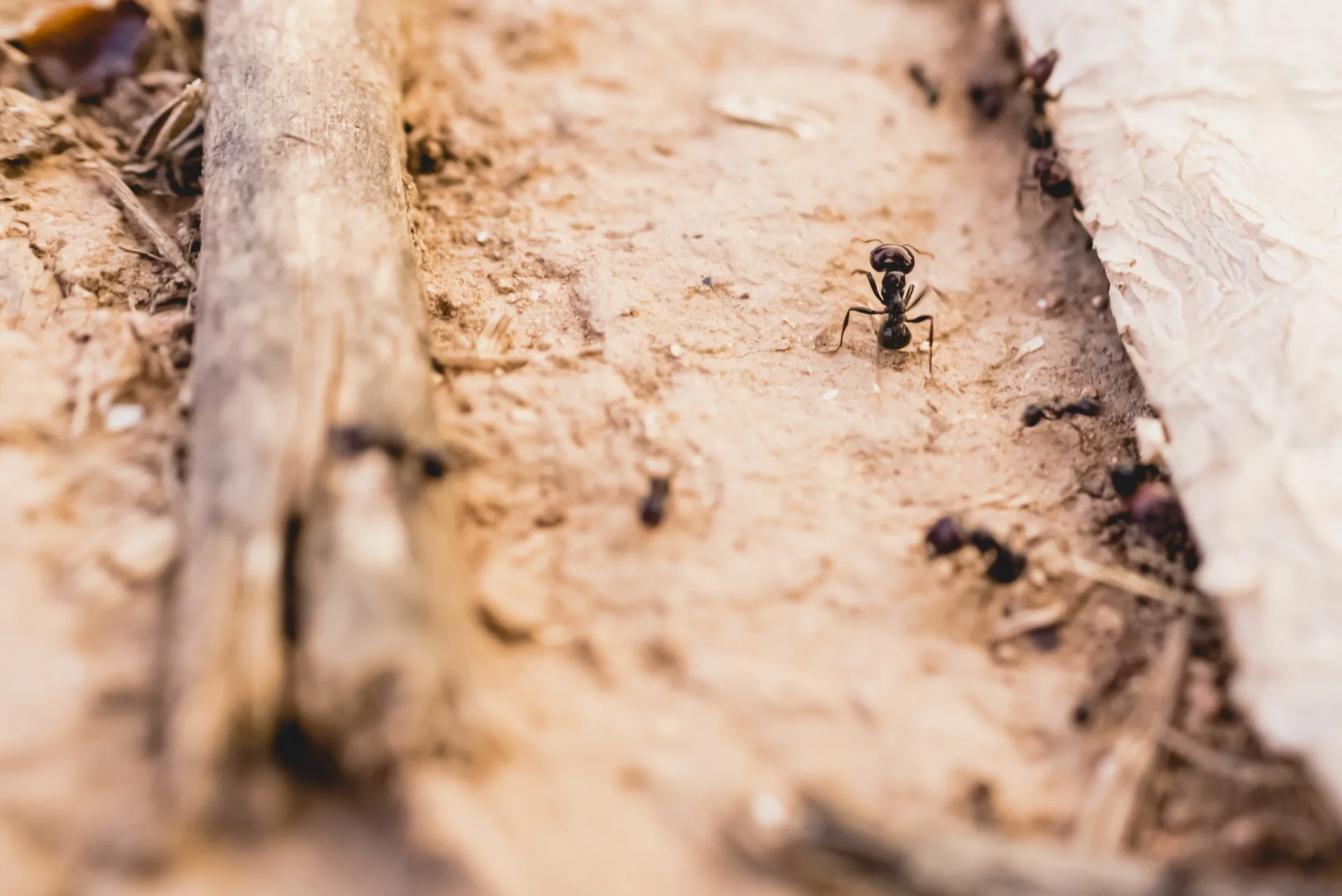
Why Pavement Ants Keep Coming Back: Addressing the Root Cause
Pavement ant recurrence after treatment almost always has a structural explanation. The colony's nest is below the pavement or foundation — in undisturbed soil that treatment products cannot easily reach — and foragers access the building through cracks, gaps around pipes, and under door thresholds. If these entry points are not sealed after treatment, foragers from the same (surviving) colony or neighbouring colonies will resume entering as soon as residual insecticide dissipates. For recurring pavement ant infestations in kitchens or bathrooms, look for the entry point: typically a gap around the drain pipe under the sink, a crack at the floor-wall junction near plumbing, or a gap at the threshold of a door to a garage or utility room.
Moisture is a secondary driver of pavement ant infestations inside the home. Ants foraging in kitchens and bathrooms are often attracted to moisture as much as food. Dripping pipes, condensation on cold surfaces, and wet areas under sink cabinets provide both water and harborage. Addressing plumbing leaks and improving ventilation in moisture-prone areas removes a key attractant and makes the treatment more effective. Gel bait placed near moisture sources is particularly effective because ants use these trails regularly.
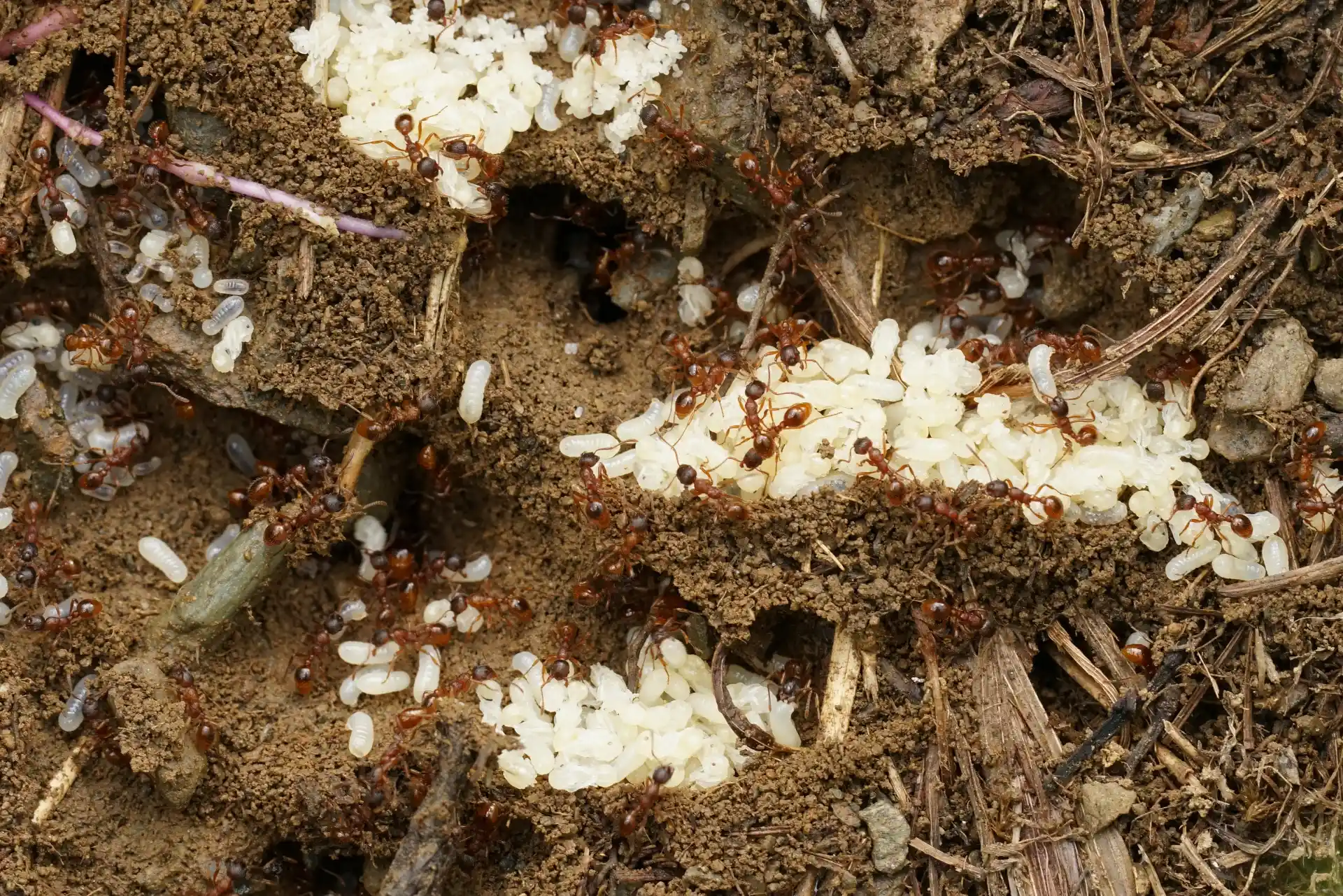
Pavement Ant Treatment for Condos and Multi-Unit Buildings
Pavement ant infestations in Toronto condominiums and apartment buildings originate outside — colonies in the building's foundation zone, parking garage, or landscaped areas send foragers inside through the building envelope. Unlike cockroaches or bed bugs, pavement ants in high-rise buildings are not spreading between units through shared walls — each unit's ant problem typically has a distinct entry point. Treatment requires sealing that entry point and creating a residual barrier in the building perimeter zone rather than treating individual units in isolation.
For property managers dealing with widespread pavement ant complaints across multiple ground-floor or basement-level units, a building exterior perimeter spray and entry point audit is more cost-effective than treating each unit individually. Bugsway works with property managers and superintendents to schedule exterior perimeter treatment in spring (April-May) before ant season peaks — proactive exterior treatment prevents interior ant complaints throughout the season. We provide building-level documentation of all service visits for property management records.
Frequently Asked Questions
Questions? Call 416-555-5555
Why do pavement ants appear every spring?
Are pavement ants dangerous?
How do pavement ants enter a kitchen on a high floor of a condo?
What's the difference between pavement ants and sugar ants?
Do pavement ant baits work better than spray?
How long does pavement ant treatment last?
Why are there flying ants in my home?
Can I get rid of pavement ants by pouring boiling water on the mound?
Pavement Ant Control in the GTA: Coverage and Long-Term Prevention
Pavement ants are the most common ant species in GTA homes, causing nuisance in kitchens, bathrooms, and along foundation walls from April through September. Bugsway's pavement ant treatment uses granular and gel bait formulations placed along ant trails, inside expansion joints in concrete, and at foundation entry points. Residual perimeter spray is applied as a barrier around the exterior foundation. Most pavement ant infestations respond within 5 to 10 days. Bugsway's 30-day guarantee covers all GTA pavement ant treatments — if activity persists after treatment, we return at no charge.
Pavement ant colonies live in the soil beneath driveways, walkways, and concrete slabs — the heating effect of sun-warmed concrete in spring triggers colony expansion and the appearance of visible forager trails. Sealing cracks in driveways and walkways and maintaining a gravel border around the foundation perimeter significantly reduce pavement ant pressure. Bugsway provides a written prevention checklist after every treatment, specific to the entry points and attractants observed during your service appointment.
Pavement ant control is available throughout all GTA communities including Toronto, Mississauga, Brampton, Burlington, Vaughan, Markham, Richmond Hill, and Oakville. Same-day pavement ant treatment appointments are available across the GTA. Annual pavement ant prevention programs — ideal for homes with interlocking stone patios, concrete driveways, and landscaped garden borders — start at $175 per year and include a spring and fall perimeter treatment.