Same-Day Emergency Service Available — GTA's #1 Rated Pest Control | 📞 416-555-5555

HACCP-Compliant | DineSafe Protection

Restaurant Cockroach
Control Toronto

Licensed, HACCP-compliant cockroach management for Toronto restaurants, cafeterias, and commercial kitchens. Protect your DineSafe rating. Fully documented. Scheduled around your hours.
HACCP-Compliant
Off-Hours Scheduling
Full Service Documentation
DineSafe Protection
Protecting Your DineSafe Rating and Your Customers

Cockroach Control for Toronto Restaurants & Food Service
Toronto has over 13,000 food premises regulated under the DineSafe program, and cockroach activity represents one of the most severe inspection findings a food business can receive. A single cockroach sighting by a Toronto Public Health inspector results in a Crucial Infraction — the highest severity classification — triggering a conditional (yellow) DineSafe posting, immediate mandatory follow-up, and public online disclosure of the violation. For a Toronto restaurant, few events carry greater reputational and operational risk. German cockroaches (Blattella germanica) are the predominant species in Toronto food service establishments. The commercial kitchen environment is nearly ideal for their proliferation: constant warmth from cooking equipment, abundant food residues in hard-to-clean locations, and year-round stable temperatures that allow continuous reproduction. A single mated female introduced via an infested delivery can establish a significant colony within 6–8 weeks. Populations in commercial kitchens commonly colonize the motor housings of commercial refrigeration units, inside the insulation layers of commercial ovens, under restaurant-grade dishwashers, and inside the wall voids adjacent to hot-line equipment. Beyond regulatory consequences, cockroach contamination carries direct food safety risk. German cockroaches are mechanical vectors of Salmonella, E. coli O157:H7, Staphylococcus, and various other foodborne pathogens, transporting them from contaminated surfaces to food preparation areas during nocturnal foraging. Their shed skins and fecal matter contaminate surfaces and can trigger allergic reactions in sensitive customers and staff. The liability exposure from a cockroach-related foodborne illness complaint makes proactive, documented pest management not just operationally sensible but essential for risk management. Bugsway has served Toronto food service operators since 2009. Our commercial cockroach programs are designed around the operational realities of restaurant environments: off-hours treatment scheduling, gel bait-primary protocols that avoid spray application on food contact surfaces, full HACCP-compatible documentation, and rapid emergency response for compliance-critical situations.
Professional restaurant cockroach control service Toronto GTA
The Regulatory and Food Safety Framework for Toronto Food Premises

HACCP, DineSafe, and Why Documentation Is Non-Negotiable
Toronto food service operators navigate multiple overlapping regulatory frameworks, all of which establish requirements for pest management that go beyond simply 'not having cockroaches.' DineSafe (Toronto Public Health): Toronto Public Health inspects all food premises under the authority of the Health Protection and Promotion Act. Evidence of cockroaches — live specimens, fecal smears, egg cases, or shed skins — triggers a Crucial Infraction under the DineSafe classification system. A single Crucial Infraction results in a conditional (yellow) posting that must be displayed prominently at the entrance. A second consecutive Crucial Infraction in the same category can result in a closure (red) order. An active, documented pest management contract with a licensed operator is considered strong evidence of due diligence during DineSafe inspections. Ontario Regulation 493/17 (Food Premises): This provincial regulation requires food premises to be maintained free of pests. It requires that pests be controlled using methods that do not contaminate food. Professional pest control by a licensed operator using Health Canada-registered products (https://www.canada.ca/en/health-canada.html) is the standard method of demonstrating compliance with this requirement. HACCP Prerequisite Programs: Under HACCP principles, pest management is classified as a Prerequisite Program (PRP) — a foundational operational condition that must be documented and maintained before HACCP plan implementation. HACCP documentation requires records of pest activity monitoring, treatment actions taken, product information, and corrective actions. Bugsway provides service reports in a format compatible with HACCP PRP documentation requirements. Bugsway provides every commercial client with: a signed service report for every visit; product information sheets for all materials applied; a pest activity trend log updated after each visit; and annual review meetings for program performance assessment. These documents support DineSafe compliance demonstration, HACCP PRP records, and insurance liability documentation.
Restaurant Cockroach Control treatment process by Bugsway certified technician
Comprehensive commercial pest management for Toronto food premises

Restaurant Cockroach Control Services

Commercial Kitchen Inspection

Thorough inspection of all commercial kitchen harborage areas: under and behind commercial refrigeration, inside oven insulation, under dishwashers, in floor drain surrounds, and inside electrical panels and wall voids.

Food-Safe Gel Bait Treatment

Professional gel bait applied in food-safe locations: inside equipment housings, under appliance bases, along concealed equipment framing. No spray application on food contact surfaces. Health Canada-registered products.

Monitoring Stations

Placement of pest monitoring glue boards in key locations throughout the kitchen and storage areas. Inspected at each service visit to track pest activity trends, identify new harborage areas, and confirm treatment efficacy.

HACCP-Compatible Documentation

Signed service report after every visit including: pest activity findings, treatment actions, products used with Health Canada registration numbers, monitoring station results, and recommendations. Compatible with HACCP PRP documentation.

Emergency Response

Same-day or next-day emergency service for restaurants facing imminent DineSafe inspection or with active cockroach sightings. Priority scheduling for commercial clients. Call 416-555-5555 for fastest response.

Sanitation & Exclusion Consultation

Written identification of structural entry points, equipment cleaning deficiencies, and food storage practices that support cockroach establishment. Prioritized recommendations for DineSafe-relevant improvements.

Facing a DineSafe Inspection? Get Prepared.

Active cockroach evidence during a DineSafe inspection triggers a Crucial Infraction and conditional posting. Don't wait — call Bugsway for priority commercial service.

Designed for Operating Food Service Businesses

Our Commercial Cockroach Treatment Process

Bugsway's commercial cockroach program is structured to deliver effective pest management without disrupting your food service operations. Every aspect of the program is designed with food safety compliance in mind. Initial Assessment Visit: Before any treatment begins, we conduct a comprehensive assessment of your premises during operating hours (to observe normal conditions) or after hours (at your preference). We inspect all equipment housing areas, storage spaces, and building infrastructure. We assess pest activity level, identify active harborage zones, map entry routes from adjacent premises or supply delivery areas, and review your current pest management documentation. The assessment results in a custom service program proposal with scheduled visit frequency, treatment protocols, and documentation format. Treatment Scheduling: All treatment visits are scheduled outside of food service hours. For most Toronto restaurants, this means early morning (6–8 AM before prep begins) or late evening (after closing). We confirm scheduling 24 hours in advance and accommodate changes on short notice. For emergency situations, we offer off-hours response. Treatment Protocol: The primary treatment modality in food preparation areas is professional gel bait applied in food-safe harborage sites: inside equipment housings, under equipment bases, along concealed framing elements, and in crack and crevice sites away from food contact surfaces. Residual insecticide is applied in non-food areas: inside electrical panels, behind wall cladding in dry storage, and under equipment in non-food prep areas. IGR is applied as a complement to bait in active infestation situations. Monitoring and Reporting: Glue board monitoring stations are placed at each visit and inspected at the subsequent visit. Station counts are logged and reported. Service reports are generated and provided after every visit with all required HACCP PRP data fields completed. We maintain a running pest activity trend log accessible to you at any time.
Bugsway restaurant cockroach control specialist at work

Restaurant Cockroach Control Pricing

Commercial pricing based on facility size and service frequency. Custom programs available for multi-location operators.

Standard Commercial

Single location, monthly service program

$299 – $499/visit
  • Full kitchen inspection every visit
  • Gel bait + residual treatment
  • Monitoring station program
  • HACCP-compatible service report
  • Off-hours scheduling
Call for Commercial Quote
MOST POPULAR

Comprehensive Commercial

High-volume operations, active infestation, or multi-location

$549 – $899/visit
  • Everything in Standard Commercial
  • IGR treatment for active infestations
  • Written sanitation & exclusion report
  • Annual program review meeting
  • Priority emergency response
Book Comprehensive Program

Multi-location pricing and annual contract discounts available. Custom programs for food processing and institutional food service. HST applicable.

Commercial Expertise, Food Safety Knowledge, Operational Discretion

Why Toronto Food Service Operators Choose Bugsway
Commercial cockroach control for food service requires a different expertise than residential service. The regulatory stakes are higher, the equipment is more specialized, and the treatment constraints are more demanding. Bugsway's commercial team has the experience and training to deliver effective results within the specific requirements of a food service environment. Our technicians understand the internal structure of commercial kitchen equipment — where cockroaches establish harborage inside commercial refrigeration compressor compartments, how they colonize the insulation cavities of commercial ovens, and how they move between units in multi-tenant commercial buildings. This equipment-level knowledge allows us to target treatments precisely rather than applying products broadly and hoping for contact. We also understand the documentation requirements of DineSafe and HACCP. Our service reports are structured to provide all information required for HACCP Prerequisite Program records: technician name and license number, date and time of service, pest activity findings with monitoring station counts, products applied with Health Canada registration numbers, and specific corrective actions. We do not provide generic receipts — we provide documentation designed to support your compliance obligations. Toronto's restaurant operators trust Bugsway for discretion. We understand that pest control visits must be unobtrusive — arriving before staff or after closing, working efficiently, and leaving without visible evidence of the visit. We treat every commercial client's pest management situation with the confidentiality it requires. For multi-location operators — restaurant groups, institutional food service operators, property managers with multiple food service tenants — we offer customized multi-site programs with consolidated reporting and preferred pricing.
Why Toronto Food Service Operators Choose Bugsway | Bugsway Cockroach Control

Protect Your Restaurant, Your Rating, and Your Reputation

Don't leave your DineSafe status to chance. Call Bugsway to establish a documented, proactive commercial cockroach control program.

Frequently Asked Questions

Common questions about restaurant cockroach control in Toronto

What pest control documentation do Toronto restaurants need?
Toronto restaurants are subject to DineSafe inspections that treat cockroach activity as a Crucial Infraction. Under Ontario Regulation 493/17 (Food Premises), food premises must be maintained free of pests. Under HACCP, pest control must be documented as a Prerequisite Program. Bugsway provides service reports with all required information for DineSafe compliance and HACCP PRP documentation.
How does cockroach control work in an operating restaurant?
Bugsway schedules commercial treatments outside of food service hours — early morning or late evening. Gel bait is the primary treatment modality in food prep areas, applied in harborage sites away from food contact surfaces. Residual sprays are used only in non-food contact areas. All products are Health Canada-registered for food premises.
What is HACCP and how does pest control relate to it?
HACCP (Hazard Analysis and Critical Control Points) is a food safety management system. Pest control is classified as a Prerequisite Program under HACCP — a documented foundational condition required before HACCP plan implementation. Bugsway provides HACCP-compatible service documentation for all commercial accounts.
How quickly can Bugsway respond to a restaurant cockroach emergency?
Bugsway prioritizes commercial food service emergencies. For restaurants with active cockroach sightings ahead of a health inspection or with a conditional DineSafe posting, we offer same-day or next-day emergency service throughout Toronto. Call 416-555-5555 directly for fastest response.
How do German cockroaches typically enter Toronto restaurants?
The most common introduction routes are: food and beverage deliveries in infested cardboard boxes; secondhand or used equipment purchases; shared loading dock or back-of-house areas; and shared infrastructure with adjacent businesses. Bugsway conducts a supply chain risk assessment as part of the commercial inspection.
What is DineSafe and how does pest control affect my rating?
DineSafe is Toronto Public Health's food premises inspection program. Evidence of cockroach activity is classified as a Crucial Infraction — the most severe category — resulting in a conditional (yellow) DineSafe posting and mandatory follow-up inspection. An active, documented pest management contract is considered strong evidence of due diligence by inspectors.
How often should a Toronto restaurant schedule pest control?
Minimum recommended frequency is monthly. High-volume operations, older buildings, or those with adjacent pest problems should consider bi-weekly service. Monthly service allows regular monitoring, timely bait replenishment, and early detection of new introductions. Bugsway's commercial programs include scheduled visits, written service reports, and annual trend analysis.
Are the pesticides used in restaurants safe for food premises?
All pesticide products used by Bugsway in food premises are Health Canada-registered for use in food-handling areas. Gel bait formulations are applied in contained sites away from food contact surfaces. Residual sprays are applied only to non-food contact areas following label requirements. We provide full product documentation with each service report for your safety records.
Audit Readiness

DineSafe Compliance: What Toronto Health Inspectors Look For

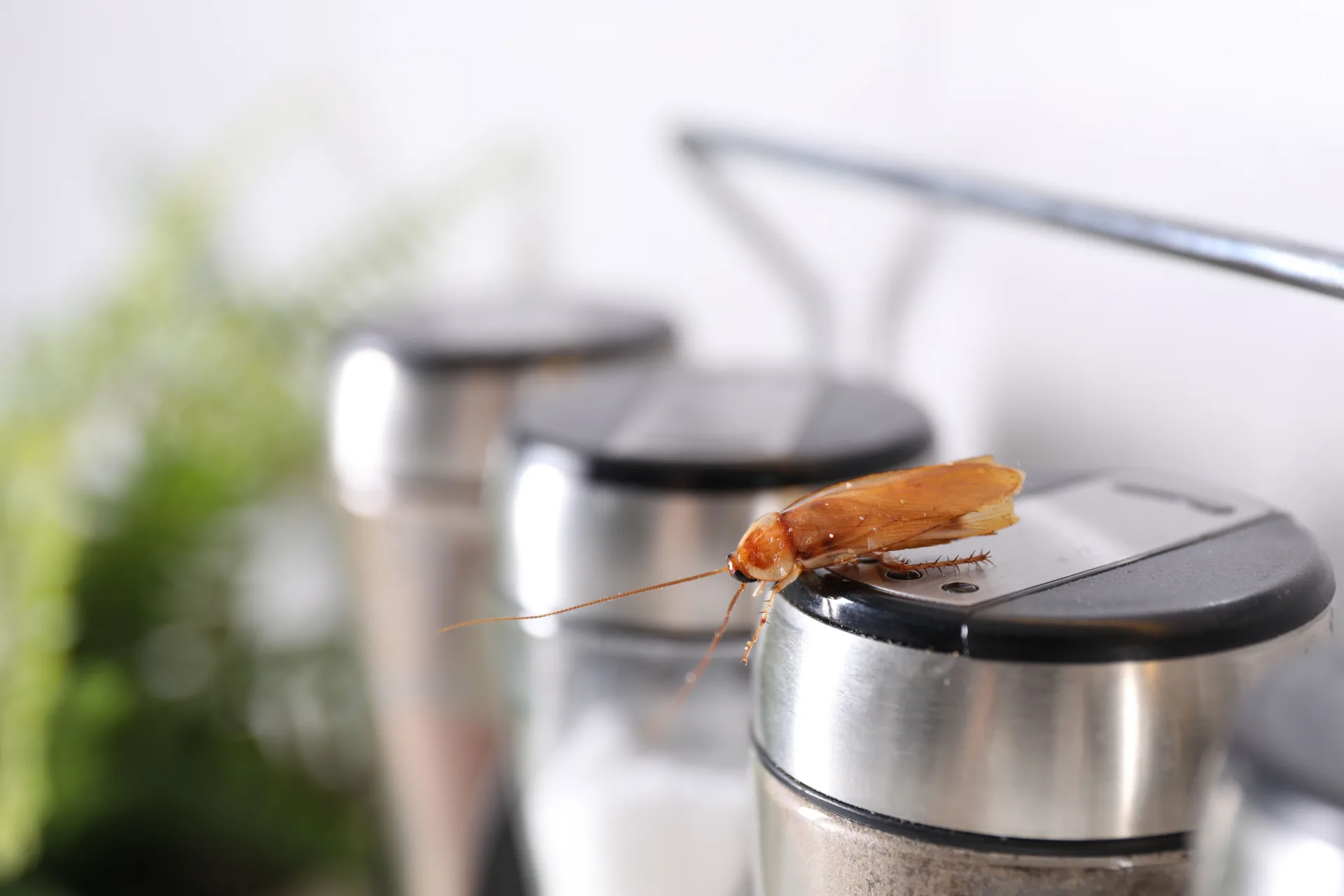
Toronto Public Health DineSafe inspectors cite cockroach evidence under several infraction categories that can result in Conditional (yellow) or Closed (red) notices. Inspectors look for: live cockroaches visible during daylight inspection — a single live cockroach during an inspection is a Critical infraction; cockroach droppings on shelving, in drawers, or on equipment surfaces, which is a Significant infraction; egg cases in food storage areas, also a Significant infraction; and evidence of cockroach harborage in structural voids. A Conditional or Closed DineSafe notice is posted publicly on the DineSafe website and on the restaurant entrance — visible to all customers and able to significantly impact revenue and reputation.

The DineSafe re-inspection process requires a restaurant to pass a follow-up inspection within a defined timeframe to have the Conditional or Closed status removed. Bugsway provides emergency same-day service for Toronto restaurants facing a conditional notice and issues a same-day corrective action report documenting treatment and measures taken — accepted by DineSafe inspectors at re-inspection. We maintain ongoing relationships with Toronto Public Health and understand the documentation expectations for each infraction type. Our service records are formatted for the DineSafe corrective action matrix and can be provided to inspectors on request to demonstrate active, documented pest management.
DineSafe Compliance: What Toronto Health Inspectors Look For | Bugsway Cockroach Control
Professional Protocol

German Cockroach Management in Commercial Kitchens: A Technician's Guide

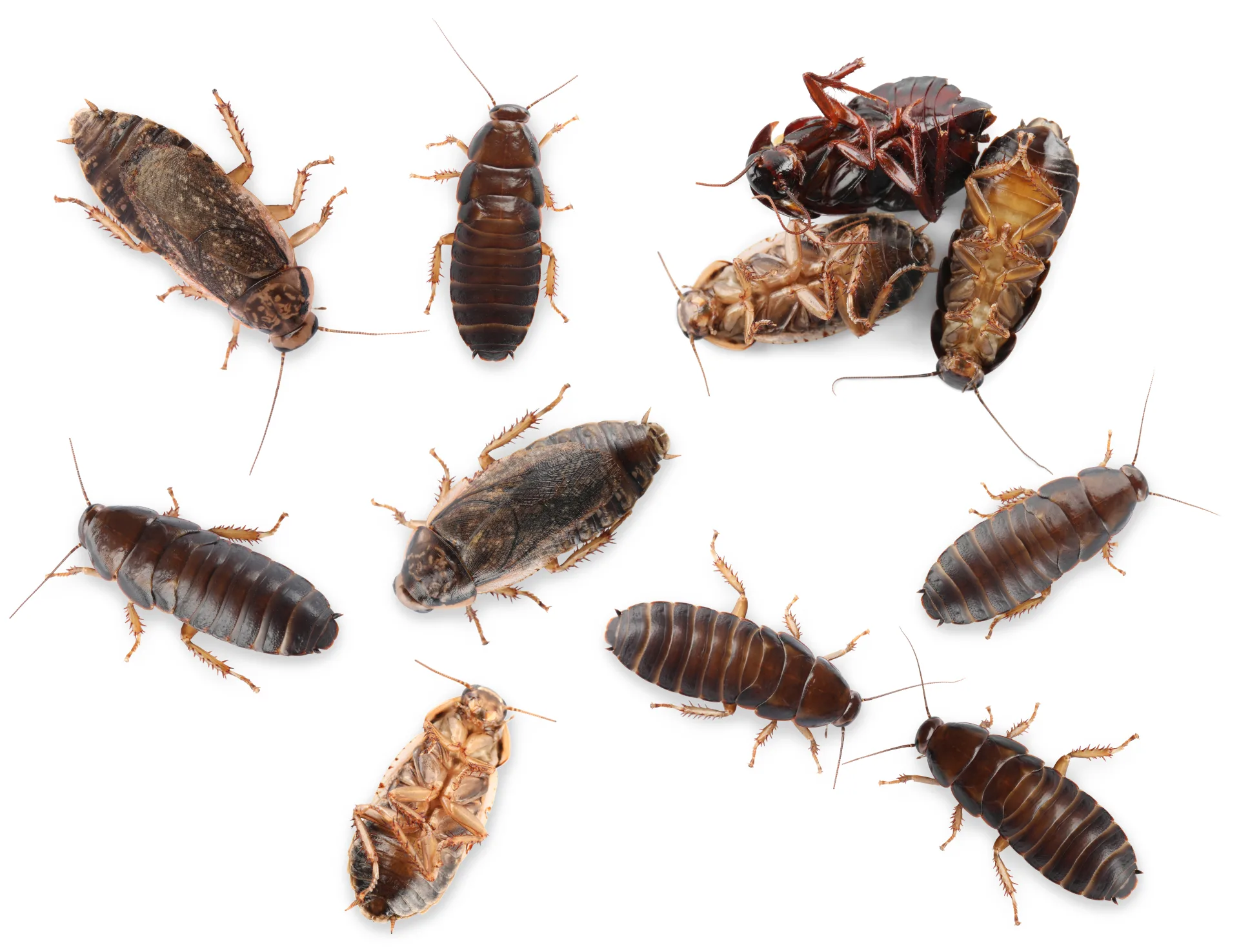
Commercial kitchen cockroach management requires a systematic approach that most restaurant operators cannot achieve with in-house pest control efforts. Every service visit begins with a full kitchen inspection — pulling equipment away from walls, opening appliance access panels, and checking under and inside all equipment with a high-powered flashlight. Activity monitoring stations, which are small sticky traps, are placed inside appliances and in hidden voids and are counted and recorded to track population trends between visits. This trend data shows whether the infestation is declining, stable, or growing — directly informing treatment intensity for the next scheduled visit.

Gel bait rotation is applied during each visit to prevent resistance development. Bugsway uses 2-3 bait products from different chemical classes in rotation, placed in harborage areas identified during the inspection: inside fryer housings, behind ice machine compressors, in the gap behind reach-in cooler coils, along the wall behind the cooking line, and inside the hinge gap on prep table doors. Crack-and-crevice injection with non-pyrethroid residual is applied to floor-wall junctions, gaps around plumbing penetrations, and any new harborage areas identified during the visit. After each treatment, a service report is issued documenting the products used, activity levels observed, and recommended sanitation and structural corrections.
German Cockroach Management in Commercial Kitchens: A Techni | Bugsway Cockroach Control
Supply Chain Defense

Preventing Cockroach Re-Introduction in Food Service

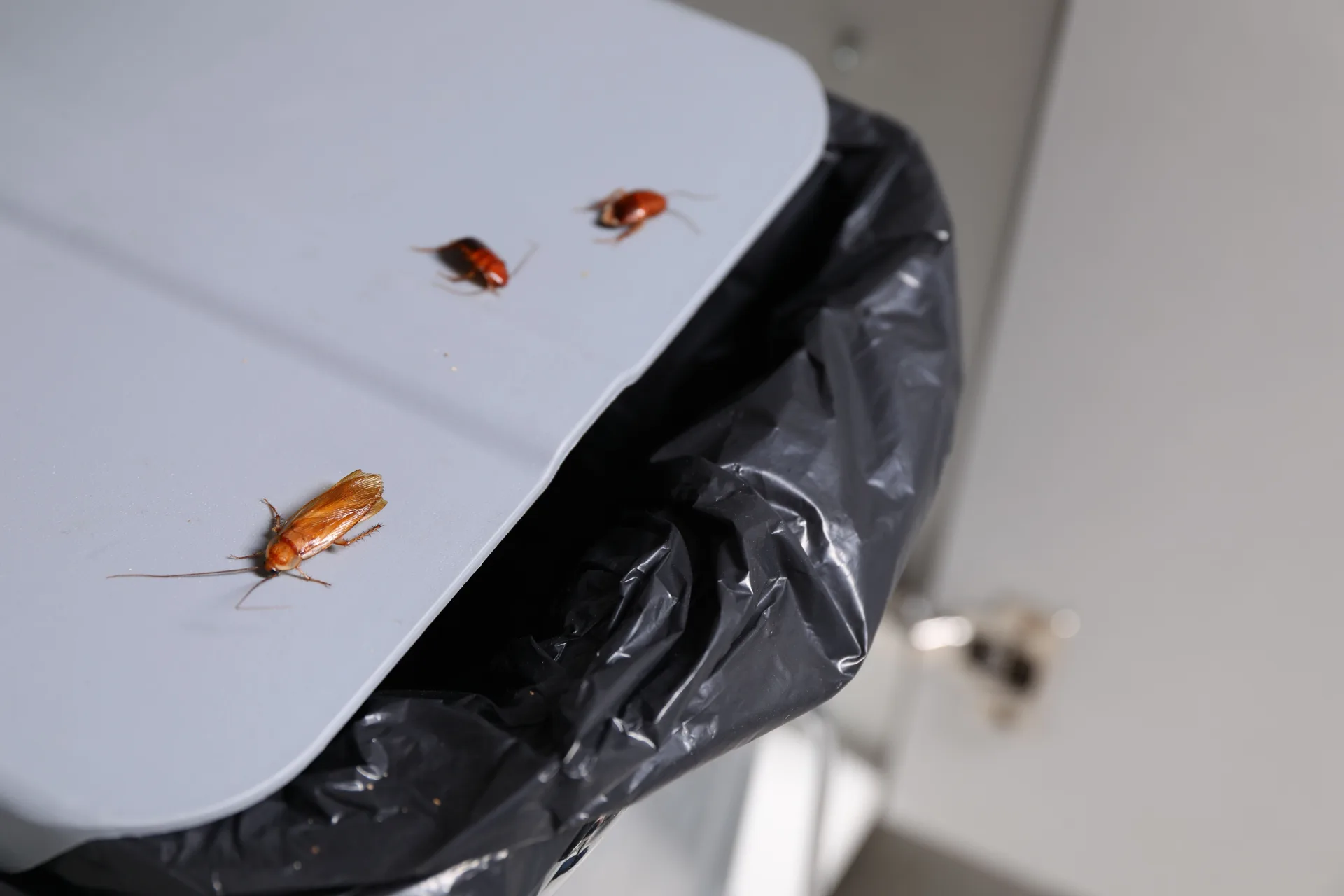
One of the most frequently overlooked vectors for restaurant German cockroach infestations is the supply chain — cockroaches arrive inside cardboard boxes, produce flats, and packaging from distributors and suppliers. A single infested box left overnight in the receiving area can introduce a new infestation within days as cockroaches disperse from the box and find harborage in the kitchen environment. Implementing a receiving protocol — opening and inspecting all inbound boxes, immediately breaking down and disposing of cardboard packaging in sealed bins, and never leaving cardboard on kitchen floors overnight — is a critical prevention measure that requires staff participation and management enforcement.

Staff training is an essential component of restaurant cockroach prevention that is often underestimated. Kitchen staff should be trained to recognize the early signs of cockroach activity: small dark droppings resembling black pepper on shelving and equipment, egg cases in protected areas, a musty sweet odour in enclosed spaces which is characteristic of heavy infestations, and daytime cockroach sightings which indicate population overpressure. Bugsway provides a staff pest identification reference card and reporting protocol with every commercial account. Prompt reporting by kitchen staff allows Bugsway to respond between scheduled service visits before populations re-establish after treatment.
Preventing Cockroach Re-Introduction in Food Service | Bugsway Cockroach Control

Frequently Asked Questions

Questions? Call 416-555-5555

How quickly do cockroaches spread in a restaurant environment?
In a commercial kitchen environment — warm, humid, with abundant food and harborage — German cockroach populations can double every 6 weeks. A single introduced pair can produce a detectable infestation of hundreds within 3-4 months. This is why monthly service visits are the minimum recommended frequency for restaurant accounts — the interval between visits must be shorter than the time it takes a small founding population to become a large established infestation.
Can a cockroach infestation cause a restaurant to be closed by health authorities?
Yes. Under Toronto's DineSafe program, a live cockroach sighting during a health inspection is a Critical infraction that can result in a Conditional (yellow) or Closed (red) notice being posted at the entrance and on the public DineSafe website. A Closed notice requires immediate cessation of food service until the property passes a re-inspection. Bugsway provides emergency same-day response to help restaurants address DineSafe cockroach infractions and prepare corrective action documentation for re-inspection.
How often should a Toronto restaurant be serviced for cockroach control?
Monthly service is the minimum recommended frequency for restaurant cockroach management. High-volume operations, restaurants in older buildings, or establishments in areas with known cockroach pressure should consider bi-weekly service. For restaurants that have recently resolved an infestation, bi-weekly service during the first 3 months provides the most reliable prevention of recurrence before shifting to monthly maintenance visits.
Does cockroach treatment affect food safety certification?
No — when conducted correctly by a licensed professional. All products Bugsway uses in food premises are Health Canada-registered for food-handling areas and applied according to label requirements that specify where and how products can be applied in proximity to food and food-contact surfaces. Bugsway provides HACCP Prerequisite Program documentation with each service visit, which supports rather than jeopardizes food safety certification.
What does a restaurant need to do before a cockroach treatment visit?
Ensure kitchen staff have completed end-of-day cleaning before the technician arrives. Pull equipment away from walls if possible to allow access to wall-floor junctions. Remove items stored directly on the floor in the kitchen. Do not apply any over-the-counter sprays or foggers before a professional visit as these repel cockroaches from bait placements and can significantly reduce treatment effectiveness. Bugsway provides a pre-service preparation checklist with all new commercial accounts.
Do cockroaches come from drains in restaurant kitchens?
German cockroaches do not typically originate from drains — they prefer dry harborage in warm appliance motors and wall voids rather than wet drain environments. American cockroaches, which are larger and reddish-brown, do come from drain and sewer systems and are more commonly found in building basement infrastructure. If you are seeing large cockroaches (35mm+) emerging from floor drains, you are likely dealing with American cockroaches, which require a different treatment approach. Bugsway identifies the species at inspection and applies the appropriate protocol.
How do you keep cockroaches out of commercial refrigeration units?
Commercial refrigeration units — walk-in coolers, reach-in coolers, and under-counter refrigerators — have warm compressor areas and motor housings that are ideal cockroach harborage even though the interior is cold. Bugsway places gel bait specifically in the compressor housing and along the coil area at the back of reach-in units. Regular cleaning of condenser coil areas to remove food debris reduces the attractiveness of refrigeration units as harborage. Gasket integrity on refrigerator doors should also be maintained as failed gaskets create additional harborage crevices.
Do natural repellents work in commercial kitchen cockroach control?
No. Essential oils, diatomaceous earth applied to surfaces, boric acid powder, and similar consumer-available natural products are not effective for controlling established German cockroach infestations in commercial kitchens. At most, surface-applied natural repellents may temporarily displace cockroaches from one area to another. For DineSafe compliance and HACCP documentation purposes, health inspectors expect evidence of licensed professional pest management using registered products — natural repellent products do not satisfy this requirement.

Contact Bugsway Commercial Services

HACCP-compliant cockroach control for Toronto food service operations. Licensed, insured, fully documented.

Also see our German cockroach treatment and cockroach prevention services.