Mosquito Larvicide Treatment Toronto
Stop mosquitoes before they hatch. Our Health Canada-registered larvicide treatments target larvae in standing water — eliminating the source of your mosquito problem and protecting your family all season long.
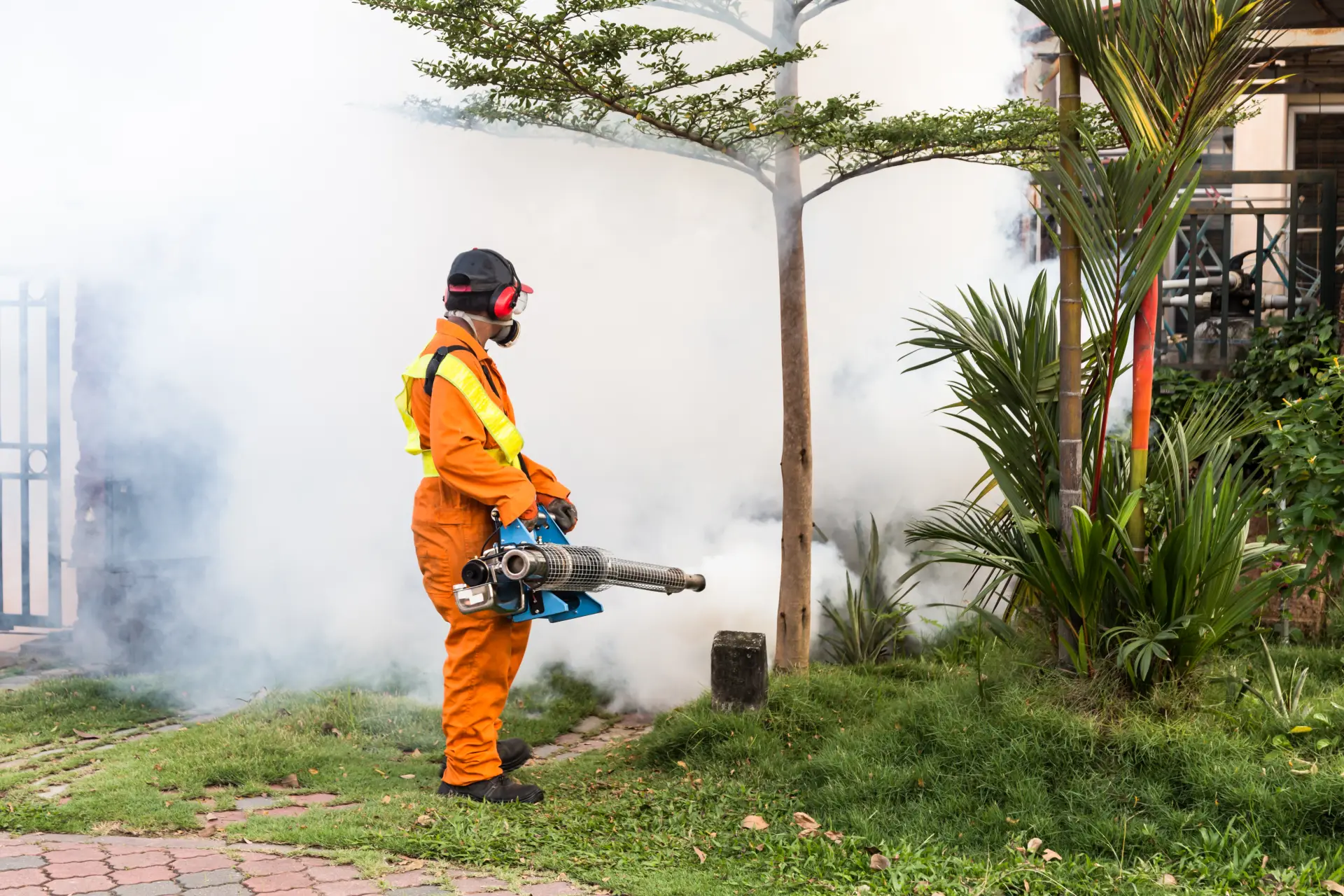
What's Included in Every Larvicide Treatment
Every larvicide service includes a comprehensive property assessment and source elimination strategy, not just product application.
Larvicide Treatment Pricing
Transparent pricing with no hidden fees. All prices include full property assessment, larvicide application, source reduction report, and written service documentation.
Single Treatment
Based on property size and number of treatment sites
- Full property breeding site audit
- BTi and/or methoprene application
- Source reduction recommendations
- Written service report
Seasonal Program
Full-season coverage May–September (4–6 visits)
- Everything in single treatment
- 4–6 scheduled visits per season
- Post-rain additional visits included
- Priority scheduling all season
- Combine savings with barrier spray
Frequently Asked Questions
What is mosquito larvicide treatment?
Is BTi larvicide safe for people, pets, and wildlife?
What types of standing water do you treat?
How long does larvicide treatment remain effective?
Does larvicide treatment replace barrier spray?
How many mosquitoes can one breeding site produce?
Are larvicide products registered in Canada?
When should larvicide treatment begin in Toronto?
Eliminate Mosquito Breeding Sites Today
Don't let standing water on your property fuel another season of mosquitoes. Call Bugsway for a same-day larvicide assessment and start protecting your family now.
Understanding Mosquito Breeding: Where Larvae Come From
Female mosquitoes lay eggs on or near standing water — as little as a bottle cap of water is sufficient for some species. In the Greater Toronto Area, the most common egg-laying sites are: ornamental ponds and water features (particularly those without circulation pumps), bird baths changed less frequently than every 4 days, eavestroughs blocked with leaf debris and holding water, low points in lawns where rain or irrigation water pools, tarps, buckets, and containers with accumulated rainwater, and catch basins at the base of downspouts. Eliminating or treating all standing water sources on a property is the most sustainable form of mosquito control.
Toronto's urban infrastructure creates significant mosquito habitat beyond residential properties. Municipal catch basins (storm drains) are a major larval development site — Toronto Public Health conducts annual catch basin larviciding across the city, but private catch basins on commercial properties and stormwater management ponds on new developments often go untreated. The city's ravine network — over 11,000 hectares of naturalized land — provides extensive wetland habitat along creek corridors that sustains West Nile Virus vector mosquitoes throughout the summer. Residential larvicide treatment reduces local breeding but cannot fully offset mosquito pressure from adjacent public land.
Bti Larvicide: The Safe, Targeted Solution
Bacillus thuringiensis israelensis (Bti) is a naturally occurring soil bacterium that produces protein crystals toxic to mosquito larvae when ingested. When Bti is applied to a water body containing mosquito larvae, the crystals are ingested by the larvae and activated in their alkaline midgut — causing gut disruption and death. Bti has no effect on non-target organisms including fish, amphibians, birds, beneficial insects (bees, dragonflies), and mammals. It is the primary larvicide used by Toronto Public Health for catch basin treatment and is approved for use in organic farming. Its safety profile makes it the preferred larvicide for ornamental ponds with fish and water gardens with aquatic plants.
Bti is available in granular, tablet, and liquid formulations. Slow-release Bti dunks (donut-shaped tablets) placed in standing water provide 30 days of larvicidal activity per dunk and are commonly used in rain barrels, ornamental ponds, and catch basins. Granular Bti formulations are more appropriate for large-scale application to broad water surfaces. Liquid Bti concentrate is used for precise dosing in measured water bodies. Bugsway applies the appropriate Bti formulation and dosage based on the size, water volume, and drainage characteristics of each treated water body. Treatment records are provided for properties that require documentation (commercial, institutional).
Larviciding Programs for Commercial Properties and HOAs
Commercial properties, condominium complexes, golf courses, parks, and homeowners association common areas with stormwater management ponds, detention basins, or ornamental water features often have significant mosquito breeding habitat that requires systematic larvicide management. A single stormwater management pond can produce millions of adult mosquitoes per season if left untreated — creating mosquito pressure across an entire residential development or commercial park. Bugsway provides commercial larviciding programs for HOAs, property management companies, golf courses, and parks — combining regular (bi-weekly or monthly) Bti applications with monitoring to document larval populations and treatment effectiveness.
For municipalities and large-scale operations, Bugsway offers larval surveillance (sampling water bodies for larval populations and species identification) combined with targeted treatment. Larval surveillance data allows treatment to be applied only when larval populations are present rather than on a fixed schedule — reducing total product use while maintaining effective control. Service records from commercial larviciding programs are provided in formats suitable for municipal reporting, HOA board documentation, and environmental compliance records. Contact Bugsway to discuss larviciding programs for stormwater management areas and commercial water features.
How Mosquito Larvicide Works: Bti and Methoprene
Understanding how larvicide products work at a biological level helps homeowners and property managers appreciate why professional application produces results that consumer products rarely match. Mosquito larvicide disrupts the larval stage of the mosquito life cycle — the period between egg hatching and adult emergence — which takes place entirely in standing water over 7 to 14 days depending on water temperature. By targeting larvae before they complete metamorphosis, larvicide prevents the production of biting adult mosquitoes without requiring any direct contact with adults in flight.
Bacillus thuringiensis israelensis (Bti) is a naturally occurring soil bacterium discovered in the Negev desert in 1976. It produces a set of protein crystal toxins (Cry proteins) during sporulation that are specifically toxic to the larvae of mosquitoes, black flies, and fungus gnats. When mosquito larvae ingest Bti spores and crystals while filter-feeding in water, the crystals are activated in the highly alkaline environment of the larval midgut — a gut chemistry found only in these susceptible insects. The activated Cry proteins bind to receptor sites on the larval gut epithelium, creating pores that cause gut lysis and death within hours of ingestion. Because the specific receptor sites targeted by Bti Cry proteins are not found in vertebrates, non-target invertebrates, fish, birds, or bees, Bti is completely harmless to all non-target organisms. It is safe for use in ornamental ponds with koi and goldfish, rain barrels used to water vegetable gardens, birdbaths, and any water feature accessible to children and pets. Bti is approved for use in certified organic farming systems and is the primary larvicide used by Toronto Public Health and Halton, Peel, and York Regional Public Health units for municipal catch basin larviciding under their West Nile Virus prevention programs. All Bti products used by Bugsway are registered with Health Canada's Pest Management Regulatory Agency (PMRA) under the Pest Control Products Act.
Methoprene is a synthetic insect growth regulator (IGR) that mimics juvenile hormone — a hormone that in insects prevents the transition from larval to adult form. When mosquito larvae are exposed to methoprene in water, their hormone signalling is disrupted and they are unable to successfully complete metamorphosis into adult mosquitoes. Unlike Bti, methoprene does not kill larvae outright; instead, it ensures they cannot develop past the larval or pupal stage. Methoprene is particularly valuable for water bodies that are difficult to access repeatedly — such as catch basins, storm drains, and large detention ponds — because slow-release methoprene pellet formulations provide 30 to 150 days of residual activity from a single application. Methoprene also presents very low risk to non-target organisms at label application rates and is registered by Health Canada for use in mosquito control programs. The combination of Bti for rapid larval kill and methoprene for long-duration residual control gives professional larvicide programs a multi-layered approach that no single consumer product can replicate.
Where to Apply Larvicide in Your GTA Property
Professional larvicide application requires identifying every standing water source on a property — not just the obvious ones. A thorough breeding site audit is the foundation of effective larvicide treatment, and the variety of potential sites on a typical GTA residential or commercial property is often larger than homeowners expect.
Ornamental ponds and water features are the most visible breeding sites on residential properties. A pond without a circulation pump or fish provides ideal stagnant water conditions for mosquito oviposition. Even ponds with pumps can develop standing water in alcoves or around the edges where circulation is poor. Bti dunks placed in ornamental ponds provide 30 days of protection without affecting fish, aquatic plants, or water quality. For larger ponds, liquid Bti concentrate is applied at a calibrated dosage based on measured water volume.
Rain barrels are a consistent mosquito breeding site on properties that use them for garden irrigation. A rain barrel with a loose-fitting lid or an uncovered top can produce thousands of adult mosquitoes per season. Bti dunk treatment of rain barrels is both effective and safe — the treated water remains safe for use on edible gardens and poses no risk to humans or pets. Alternatively, rain barrels can be fitted with fine-mesh screen covers that prevent mosquito access while maintaining water collection function.
Downspout extensions and splash pads collect water after rain events and are frequently overlooked during property inspections. A cracked or improperly graded downspout extension that holds water for more than four days after rain is a viable breeding site. We assess drainage patterns during the breeding site audit and recommend grading corrections or extension modifications where standing water is chronic.
Low spots in lawns that hold water after rain are a major breeding source on properties with heavy clay soils, compacted turf, or improper grading. Water pooling in a lawn depression for five or more days after a rain event is sufficient for a complete generation of mosquito larvae to develop. Granular Bti is broadcast over these areas when standing water is present. Long-term solutions include core aeration, topsoil levelling, or French drain installation to improve drainage — we note these recommendations in our site audit report.
Drainage swales between properties or along roadsides that hold water for extended periods after rain are significant breeding sites. While municipal swales may be treated by regional public health units, private swales on residential or commercial properties are the property owner's responsibility. Liquid Bti or methoprene granules applied to swale water provide effective larval control without affecting the drainage function of the swale or harming wildlife.
Tree holes and hollow stumps fill with rainwater and provide warm, protected breeding sites that are easily overlooked. A hollowed section of a mature tree where a limb has been removed can hold enough water to sustain multiple generations of Aedes mosquitoes — which prefer these natural containers over open water. Filling tree holes with sand or foam can eliminate the water-holding capacity; where filling is not practical, Bti granules applied to visible water in tree holes are effective.
Construction site puddles and grading depressions on active construction properties and newly developed lots are among the highest-density mosquito breeding sites in urbanizing GTA communities. Compacted subgrade holds water for weeks; equipment ruts and tire tracks create dozens of small water bodies across a site. Bugsway provides larvicide programs for construction sites and new development projects, including documentation for environmental compliance reporting required by Conservation Authorities.
Larvicide Application Schedule for Ontario
Effective mosquito larvicide treatment in Ontario requires timing applications to the mosquito seasonal cycle, which is in turn tied to water temperature and weather patterns documented through Halton, Peel, Toronto, and York Regional Public Health West Nile Virus monitoring programs. A properly timed larvicide schedule prevents the first generation of adults from establishing early in the season and maintains suppression through the highest-risk period for West Nile Virus transmission.
First application — May, when water temperatures reach 10°C. Culex pipiens and Aedes vexans, the two dominant mosquito species in Toronto, begin hatching from overwintered eggs and laying new eggs when standing water temperatures consistently exceed 10°C — typically the first two weeks of May in the GTA. The first larvicide application of the season should be timed to coincide with initial egg hatching, preventing the first adult generation from emerging. Early May treatment is particularly important for permanent water features (ponds, rain barrels) that will be in continuous use through the season. Toronto Public Health typically begins its catch basin larviciding program in May — residential property owners who begin their larvicide program at the same time achieve the best early-season suppression results.
Second application — June, for peak breeding season. June represents the transition into the peak mosquito breeding season. Water temperatures are rising, rainfall events are frequent, and new standing water sources (post-rain depressions, overflowing containers) appear regularly. The June application targets both permanent water features — which need their Bti dunk replaced as the May application's residual expires — and any new standing water created by spring rain events. For properties on a seasonal program, June visits include a full breeding site re-audit to identify any new water accumulation created since the May visit.
Third application — July through August, if summer rainfall is high. July and August represent the peak period for West Nile Virus transmission risk in the Toronto area, coinciding with the highest Culex pipiens adult populations. If summer rainfall is above average — which is common in the GTA during El Nino years — additional standing water sources are created and existing sources are replenished, potentially diluting or flushing previously applied larvicide. High-rainfall summers warrant additional applications in July and August, timed approximately three weeks apart to maintain continuous residual coverage. Toronto Public Health's weekly WNV mosquito trap data, available on the City of Toronto website, provides a useful indicator of mosquito population pressure and can inform timing decisions for additional applications.
Fourth application — Early September, for warm fall seasons. In years with warm late summers and mild early falls — increasingly common in Ontario as average temperatures rise — mosquito breeding continues into September. Culex pipiens populations can remain elevated through the first week of September in warm years, and West Nile Virus risk persists as long as adult populations are active. A September larvicide application maintains suppression through the end of the practical breeding season and prevents a late-season population surge that can make outdoor living uncomfortable well into autumn. The need for a September application is assessed based on observed water temperatures and adult mosquito activity at the time of the August service visit.
DIY vs Professional Larvicide: Why Professional Application Matters
Consumer mosquito larvicide products — primarily Bti dunk tablets sold at garden centres and hardware stores — are effective when applied correctly to the right water bodies at the right dosage and frequency. Homeowners who are diligent about treating all standing water sources on their property with properly dosed Bti products can achieve meaningful mosquito reduction. However, several factors consistently make professional larvicide application more effective than DIY approaches for most residential and commercial properties.
Concentration accuracy. Effective larvicide treatment requires applying the correct quantity of active ingredient per unit of water volume. Bti dunks are designed for approximately 200 litres (one full rain barrel) per dunk — overcrowding multiple dunks in a small container does not improve efficacy and wastes product, while a single dunk in a large ornamental pond with 2,000 litres of water significantly underdoses the treatment. Professional technicians measure or estimate water volumes and calculate dosages accordingly, ensuring each water body receives effective treatment without wasted product. For liquid Bti concentrate — which provides more precise dosing than tablet formulations — accurate calibration requires equipment and training that is impractical for homeowners to replicate.
Complete coverage of all water bodies. The most common failure mode of DIY mosquito control is incomplete coverage — treating the rain barrel and birdbath while missing the water pooled under the deck, the tree hole in the back corner of the yard, the downspout splash pad, and the clogged eavestrough section above the garage. A single untreated breeding site producing 500 adult mosquitoes per week can sustain a mosquito problem even when all other sites are correctly treated. Professional breeding site audits systematically cover the entire property, including locations that homeowners typically miss.
Regulatory compliance and product availability. Professional-grade Bti granule formulations — which are more appropriate for broadcast application to large surface-water areas than consumer dunks — are not available in retail stores. They are registered for use only by licensed pest control operators. Methoprene slow-release pellets and liquid Bti concentrate in the concentrations used for professional programs are similarly restricted to licensed applicators under the Ontario Pesticides Act. This means that homeowners cannot replicate a professional program using products available at Canadian Tire or a garden centre — the product spectrum available to professionals is simply broader and more appropriate for complex property applications.
Documentation. Commercial properties, rental properties, and properties seeking to demonstrate due diligence for liability purposes benefit significantly from professional service documentation. Written service reports documenting water bodies treated, products applied, registration numbers, quantities, and technician licence numbers provide records that consumer DIY treatment cannot produce. For strata corporations, commercial landlords, and HOAs, professional larvicide documentation is an important part of the property management record.
Larvicide Treatment: More Frequently Asked Questions
Still have questions? Call 416-555-5555 — our technicians are available 7 days a week.
Is larvicide safe for pets and children?
How long does larvicide treatment last?
Do I need to remove fish from my pond before treatment?
Can I use larvicide in my rain barrel?
How is larvicide different from adult mosquito barrier spray?
Is larvicide treatment covered under a seasonal program?
When should I schedule my first larvicide application?
What if it rains right after application?
Frequently Asked Questions
Questions? Call 416-555-5555