Hornet Control
Toronto & GTA
Safe, expert removal of bald-faced hornet and European hornet nests from homes, businesses, and outdoor spaces throughout Toronto. Licensed technicians. Same-day service available.
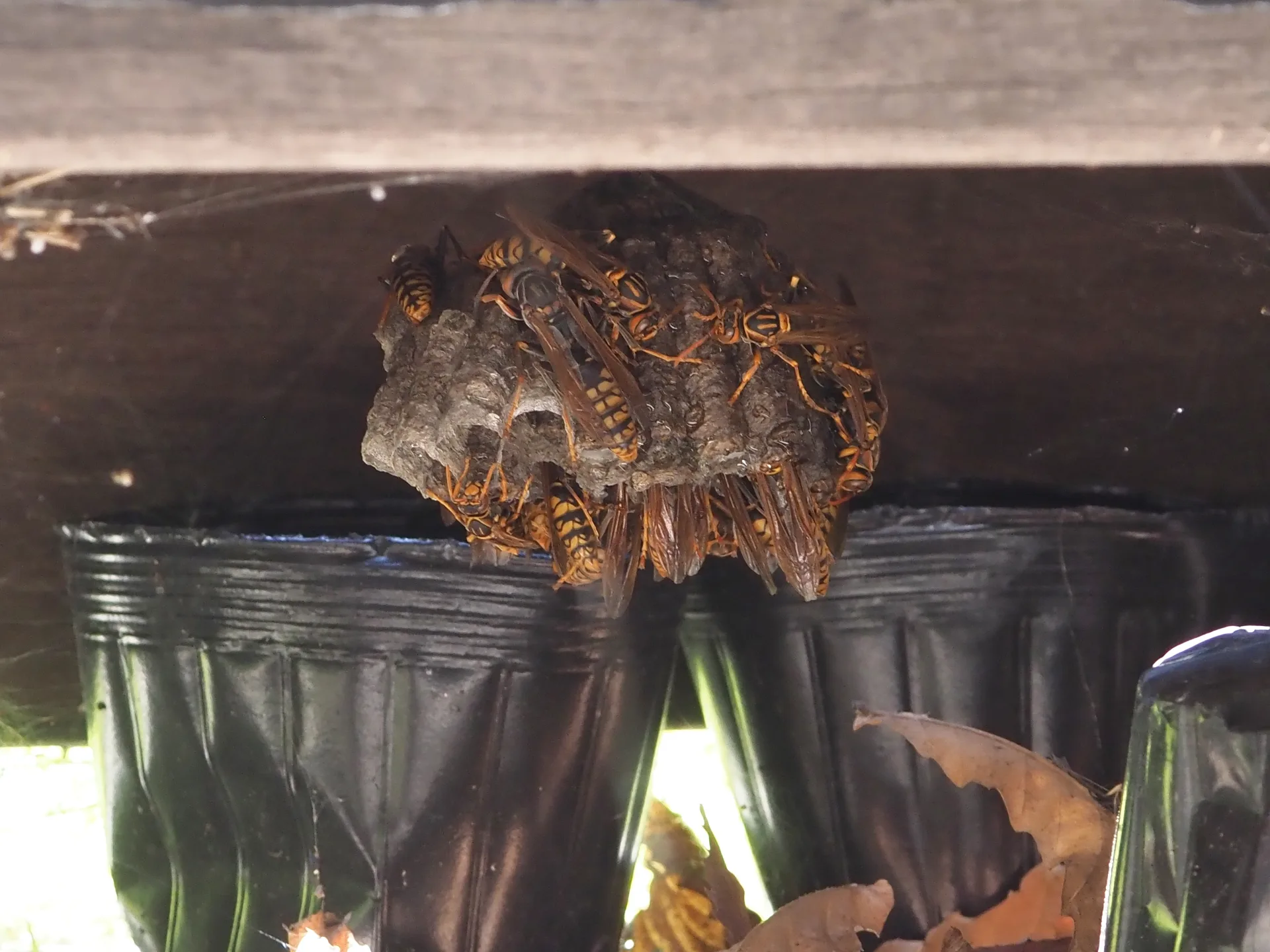
Hornets in Toronto: Bald-Faced & European Species
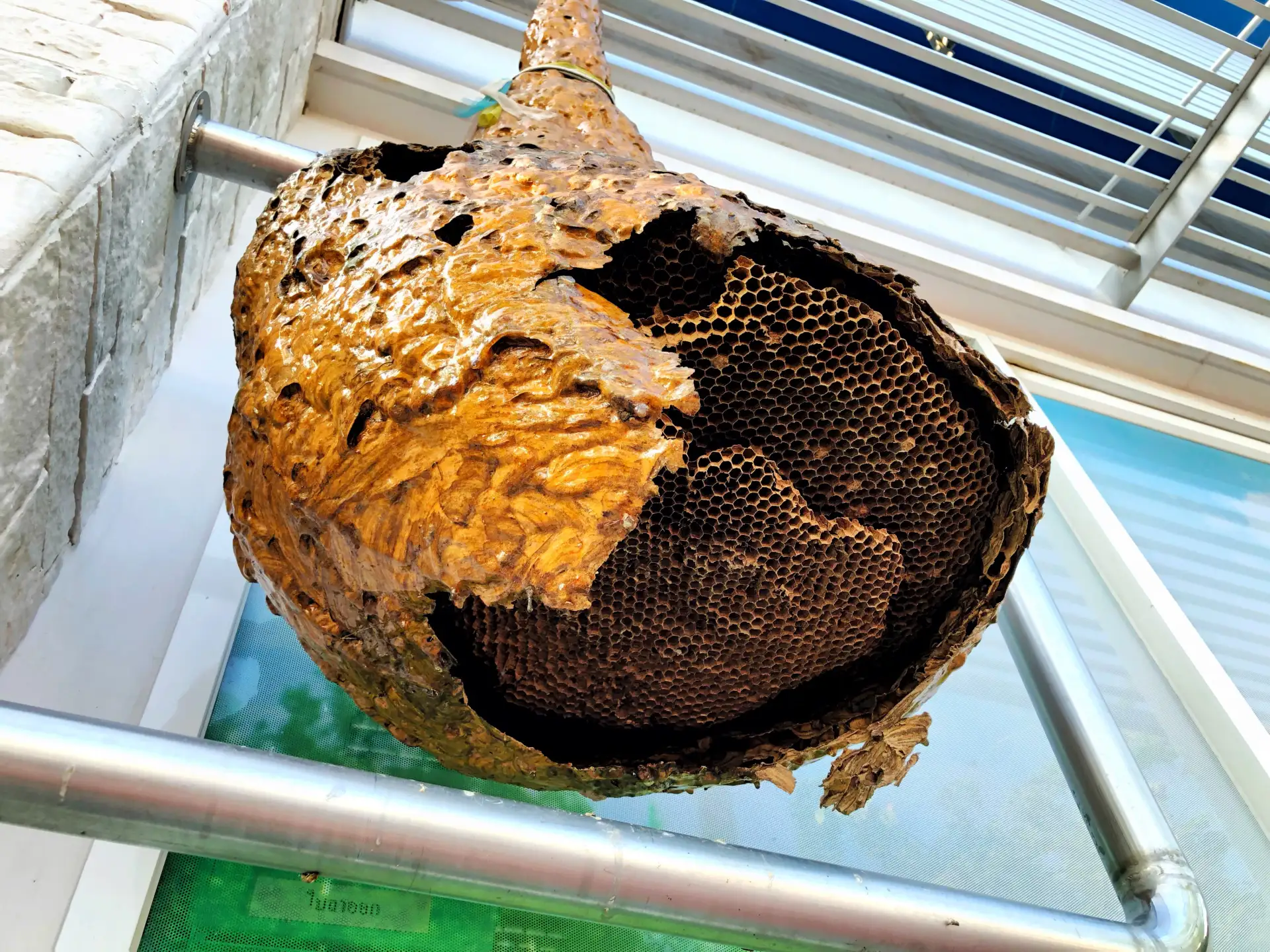
Why Hornet Removal Requires Professional Expertise
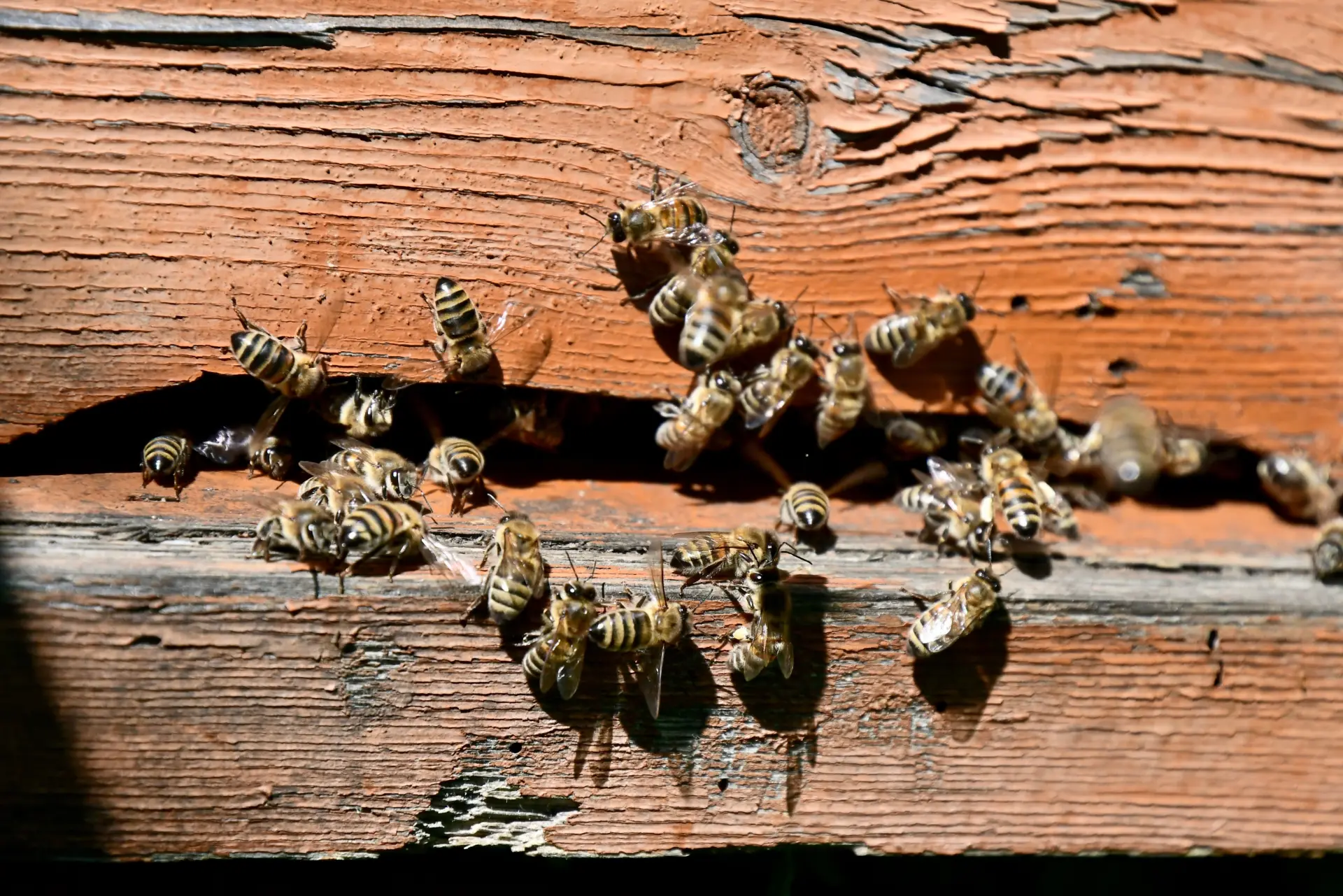
Hornet Control Services
Species Identification
Accurate identification of hornet species — bald-faced hornet vs. European hornet — determines the correct treatment approach, timing, and PPE requirements for safe removal.
Exposed Nest Removal
Removal of suspended paper nests from trees, shrubs, eaves, and exterior walls. Professional-grade treatment applied at dusk or dawn for maximum colony neutralization before physical removal.
Cavity Nest Treatment
For European hornet colonies nesting in wall voids, attic spaces, and hollow trees. Specialized injection equipment delivers treatment into concealed nest chambers without requiring destructive access.
Emergency Same-Day Response
Hornets near entrances, play areas, or HVAC units require immediate attention. Bugsway offers same-day emergency hornet response throughout Toronto and the GTA when your situation cannot wait.
Exclusion & Prevention Advice
After nest removal, technicians inspect structural entry points that European hornets may use — gaps around fascia boards, soffit vents, utility penetrations — and provide targeted exclusion recommendations.
Commercial Property Service
Hornets on commercial properties — restaurant patios, school grounds, warehouse loading docks — require fast, discreet resolution. We schedule around business hours and provide documentation for health and safety records.
Hornets in Your Yard or Home? Don't Wait.
Hornet colonies grow rapidly through summer. A nest discovered in June can triple in size by August. Early removal is safer, faster, and less expensive.
Our Hornet Removal Process
Hornet Control Pricing
Transparent pricing with no hidden fees. Final cost confirmed before any work begins.
Standard
Exposed nest, accessible location
- Species identification & site assessment
- Professional insecticide treatment
- Physical nest removal
- 30-day service guarantee
- Verbal prevention recommendations
Comprehensive
Cavity nests, large colonies, multiple sites
- Everything in Standard
- Cavity nest injection treatment
- Full property perimeter inspection
- Written exclusion report
- Full season guarantee (2 follow-up visits)
Pricing varies by nest size, location, and species. All quotes confirmed before work begins. HST applicable.
Why Toronto Chooses Bugsway for Hornet Control
Ready to Reclaim Your Yard?
Don't let a hornet nest dictate how you use your outdoor space. Bugsway provides fast, safe, guaranteed hornet removal throughout Toronto and the GTA.
Related Wasp & Bee Services
Wasp Nest Removal
Professional removal of yellowjacket and paper wasp nests from Toronto properties. Fast-acting treatment with same-day service available.
Learn About Wasp RemovalBee Relocation
Ethical live removal and relocation of honey bee swarms and established colonies by licensed beekeepers. Protecting pollinators, protecting your home.
Learn About Bee RelocationAll Pest Control Services
From ants and rodents to cockroaches and bed bugs, Bugsway provides comprehensive pest management for Toronto homes and businesses.
View All ServicesFrequently Asked Questions
Common questions about hornet control in Toronto
What types of hornets live in Toronto?
Are hornets dangerous?
How do I identify a hornet nest?
Can I remove a hornet nest myself?
What is the process for professional hornet removal?
When is the best time to remove a hornet nest?
Will hornets come back to the same location next year?
Does Bugsway offer a guarantee on hornet control?
Contact Bugsway Today
Available across Toronto and the GTA. Licensed, insured, and guaranteed.
Also see our wasp nest removal and bee relocation services.
Hornets in Ontario: Species Guide and Risk Assessment
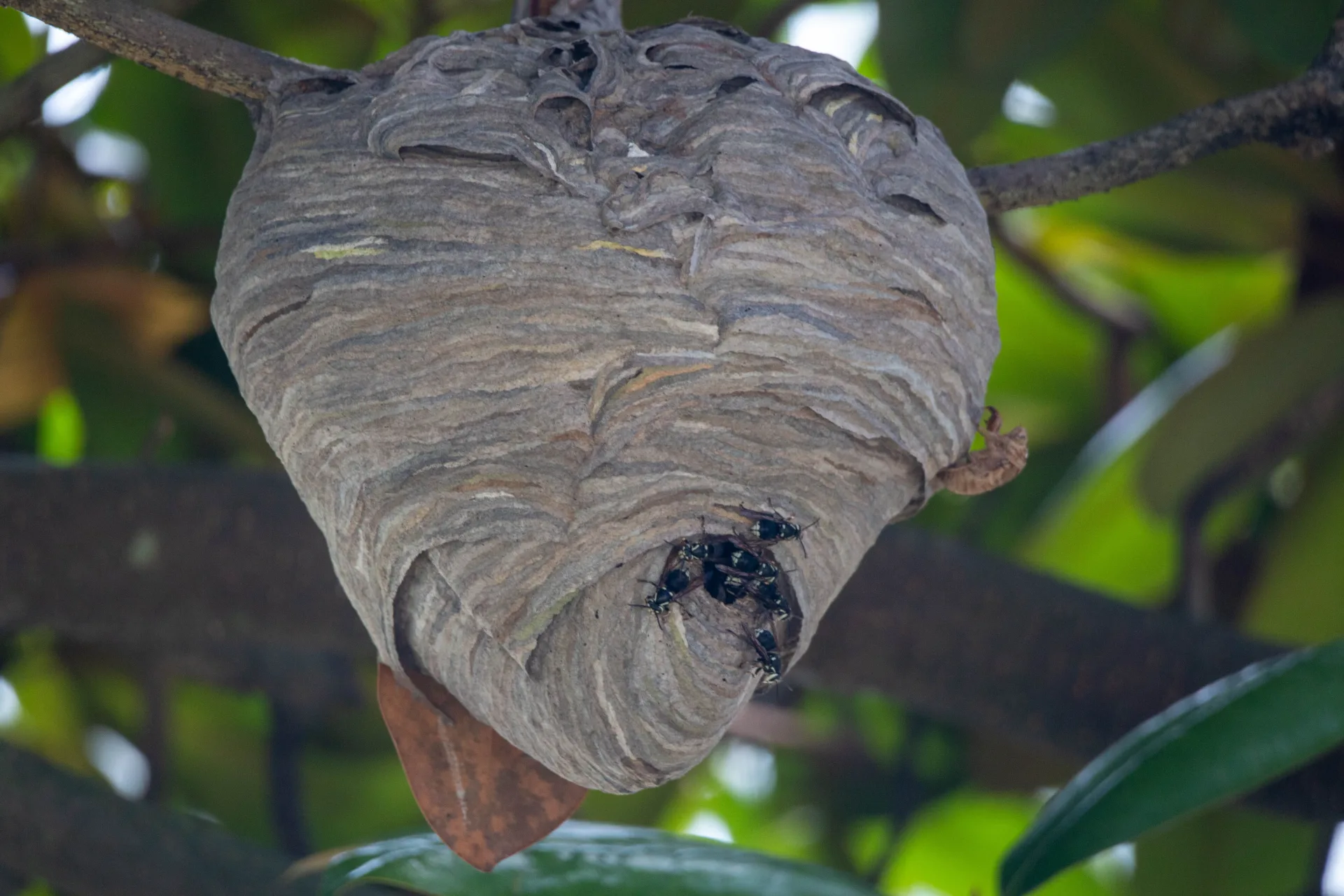
Ontario has two hornet species: the bald-faced hornet (Dolichovespula maculata), technically a large yellowjacket rather than a true hornet, and the European hornet (Vespa crabro), introduced from Europe in the 1800s. Bald-faced hornets are common throughout Toronto and the GTA, building the distinctive large grey paper nests (football to beach ball sized) visible in trees, shrubs, and on building overhangs from July through September. Their colonies reach 400-700 workers at peak size — significantly fewer than common yellow jackets but with larger, more aggressive individuals that can sting multiple times and pursue perceived threats aggressively for a significant distance.
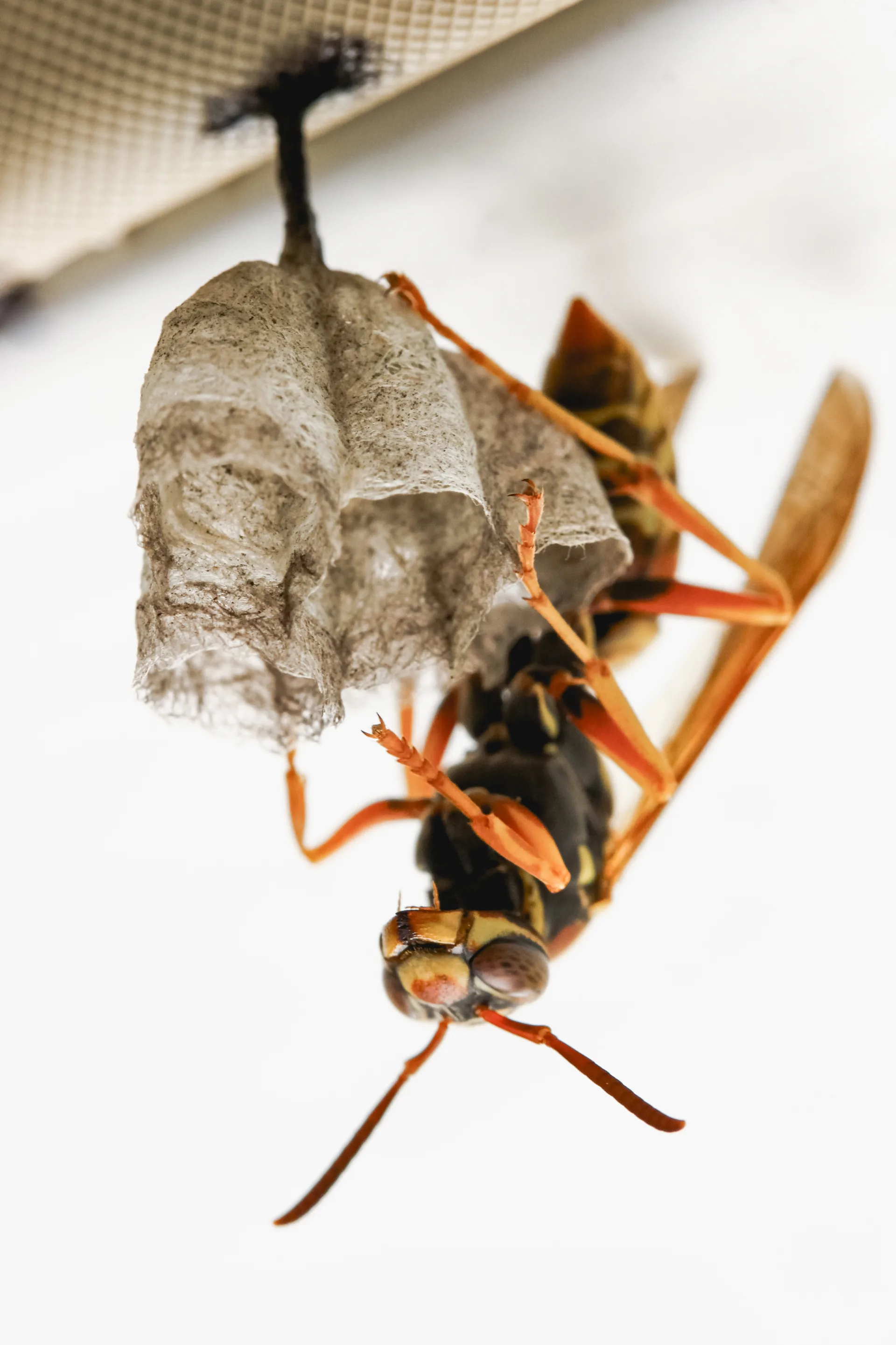
European hornets are larger (25-35mm body length — visibly larger than any yellow jacket) and brownish-yellow rather than yellow-black. They are less common in Toronto but have been documented in suburban areas with mature trees. Unlike yellow jackets, European hornets are active at night — they are attracted to light and will sting if disturbed near lights after dark, which can surprise residents who don't expect stinging insects after sunset. Both species require professional treatment. Unlike honey bees (protected pollinators), hornets are not protected and extermination is appropriate when nests pose a risk to building occupants.
Bald-Faced Hornet Nest Removal: What Makes It Challenging
Bald-faced hornet nests in trees and shrubs present a challenging treatment scenario because they are typically in exposed positions without easy concealment of the technician's approach. Workers have excellent vision and react aggressively to movement detected near the nest. Treatment requires insecticide injection into the nest entrance (located at the bottom) using a pressurized applicator from maximum safe distance — followed by retreat and waiting for the knockdown to occur before approaching the nest for removal. For nests in accessible locations (under a deck, attached to a building overhang), the approach can be controlled more easily and is safer than treating a nest 8 metres up in a tree.
Nests are removed after worker kill is confirmed — typically 24-48 hours after treatment. The paper nest itself contains no living wasps after successful treatment, but should be removed to prevent other stinging insects (yellow jackets) from establishing in the same location the following year — though this is uncommon. Nests can be left in trees without removal if they are in a location where no people or pets will contact them and the visual presence is not a concern. Never remove a nest you believe to be inactive without confirming treatment — late-season nests may still have workers inside.
European Hornet Identification and Nest Location
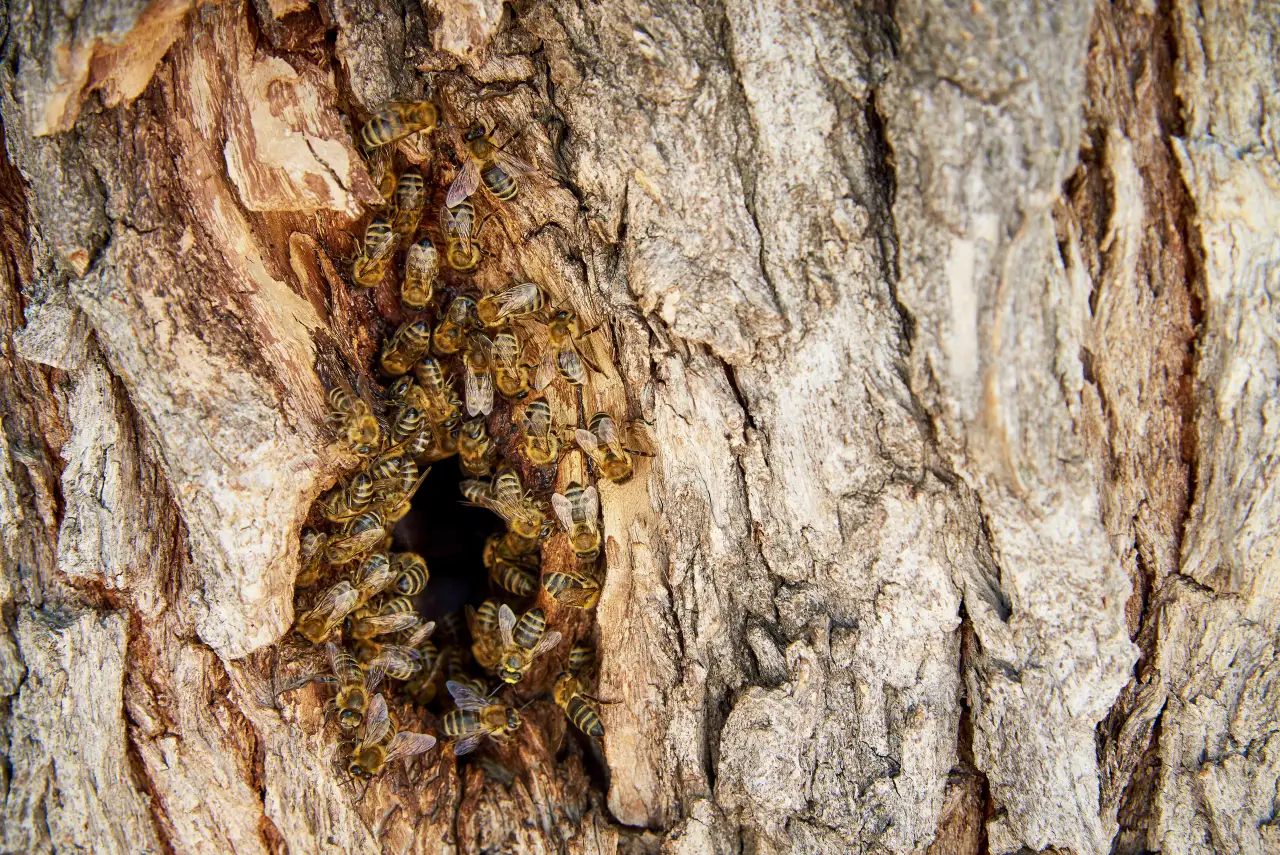
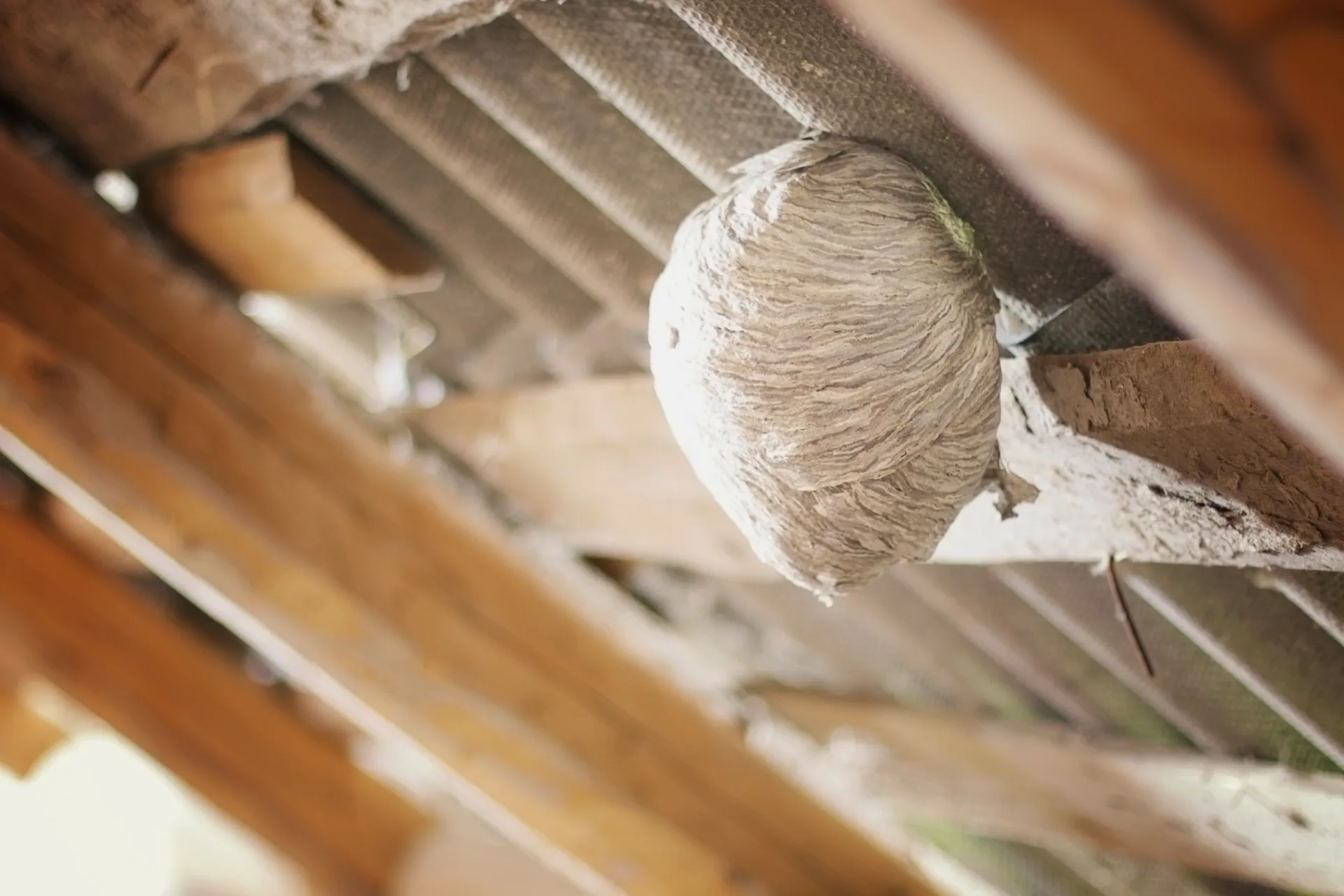
European hornets typically nest inside hollow trees, inside wall voids and attic spaces, and in other enclosed cavities — unlike bald-faced hornets which build exposed aerial nests. The nest entrance may be a hole in a tree trunk, a gap in a shed wall, or an opening in a brick chimney. Because the nest is concealed, the presence of European hornets is often first indicated by regular flight activity in and out of a single opening on a building or tree, particularly active in evening hours. Workers foraging for wood pulp (to construct the paper nest) may be observed stripping bark from young tree branches.
Treatment of concealed European hornet nests requires applying insecticide dust into the nest entrance and maintaining a safe distance — European hornets are significantly larger and more powerful stingers than most yellow jackets. The nest entrance should not be sealed during treatment, as sealing forces hornets to find an alternative exit which may be through the interior of the building. After worker kill is confirmed (48-72 hours), the entrance can be sealed with appropriate materials. If the nest is inside a wall void, accessing it for removal may require opening the wall — Bugsway advises on whether removal is recommended or whether leaving the treated nest in place is the better option.
Frequently Asked Questions
Questions? Call 416-555-5555