Wasp Nest Removal
Toronto & GTA
Wasp nests on your Toronto property are an anaphylaxis risk for your family and guests. Bugsway's licensed technicians safely eliminate yellow jacket, paper wasp, and hornet nests from eaves, walls, attics, and ground locations — same day, guaranteed.
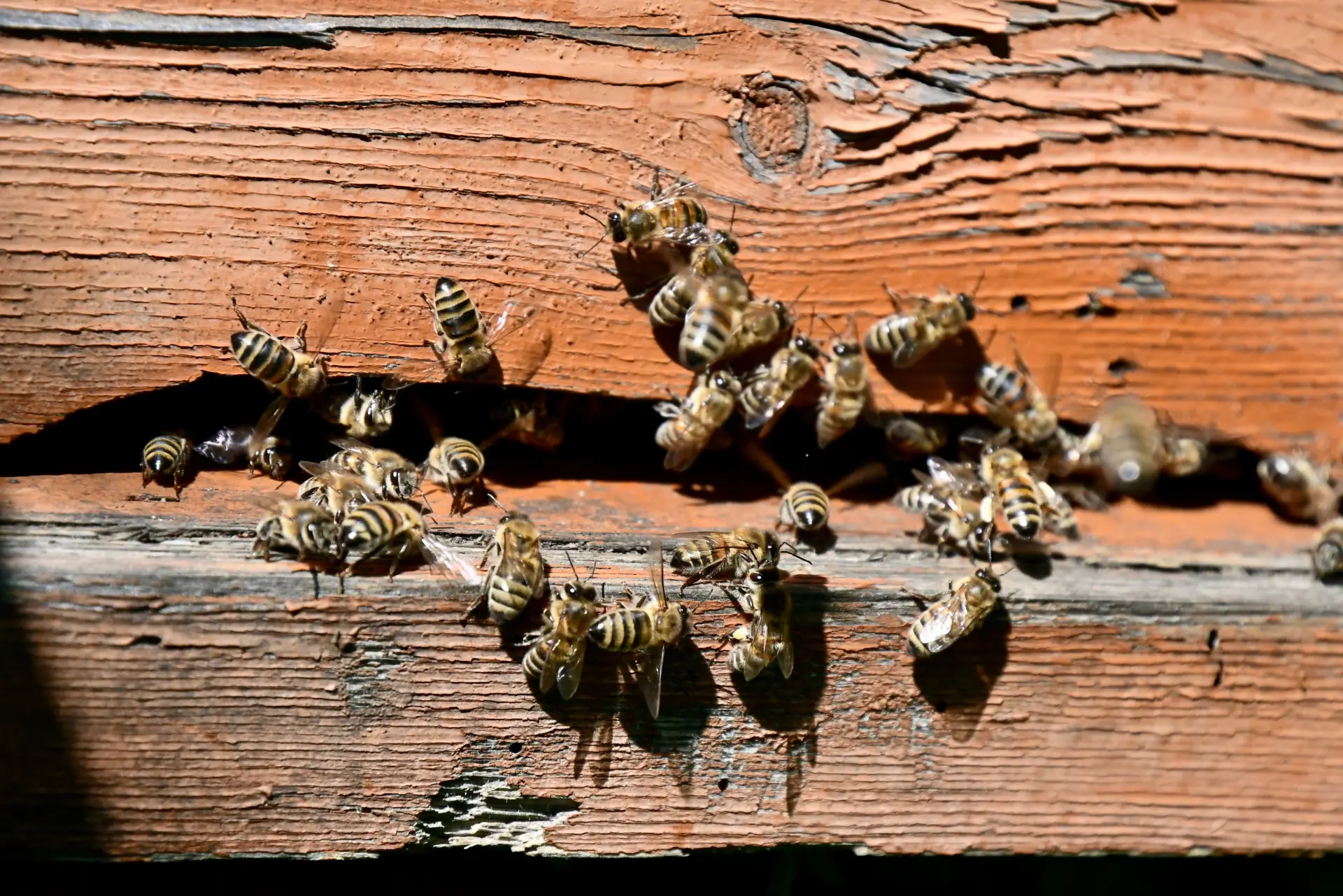
Wasps in Toronto — Species, Risks, and Nesting Behaviour
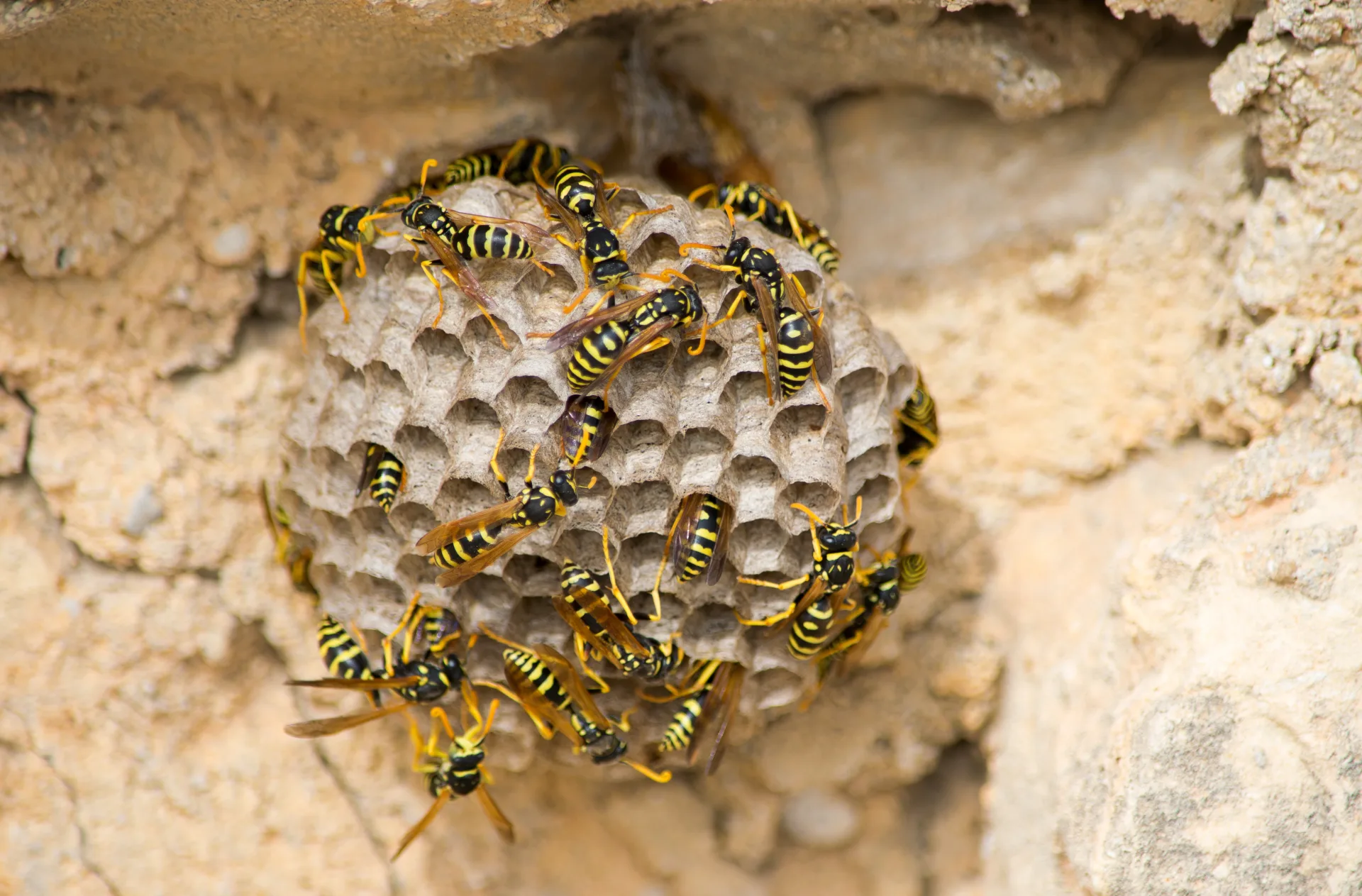
Toronto and the GTA are home to several social wasp species that pose significant stinging risks to homeowners and their families. The most prevalent are yellow jackets (Vespula vulgaris and V. germanica), which build papery nests in protected cavities including ground burrows, wall voids, attic spaces, and under deck boards. Yellow jackets are the species responsible for the majority of wasp sting incidents in Toronto, particularly in late summer when their large colonies — often numbering 5,000–15,000 workers — become highly aggressive in defence of nest sites and foraging around outdoor dining and garbage areas.
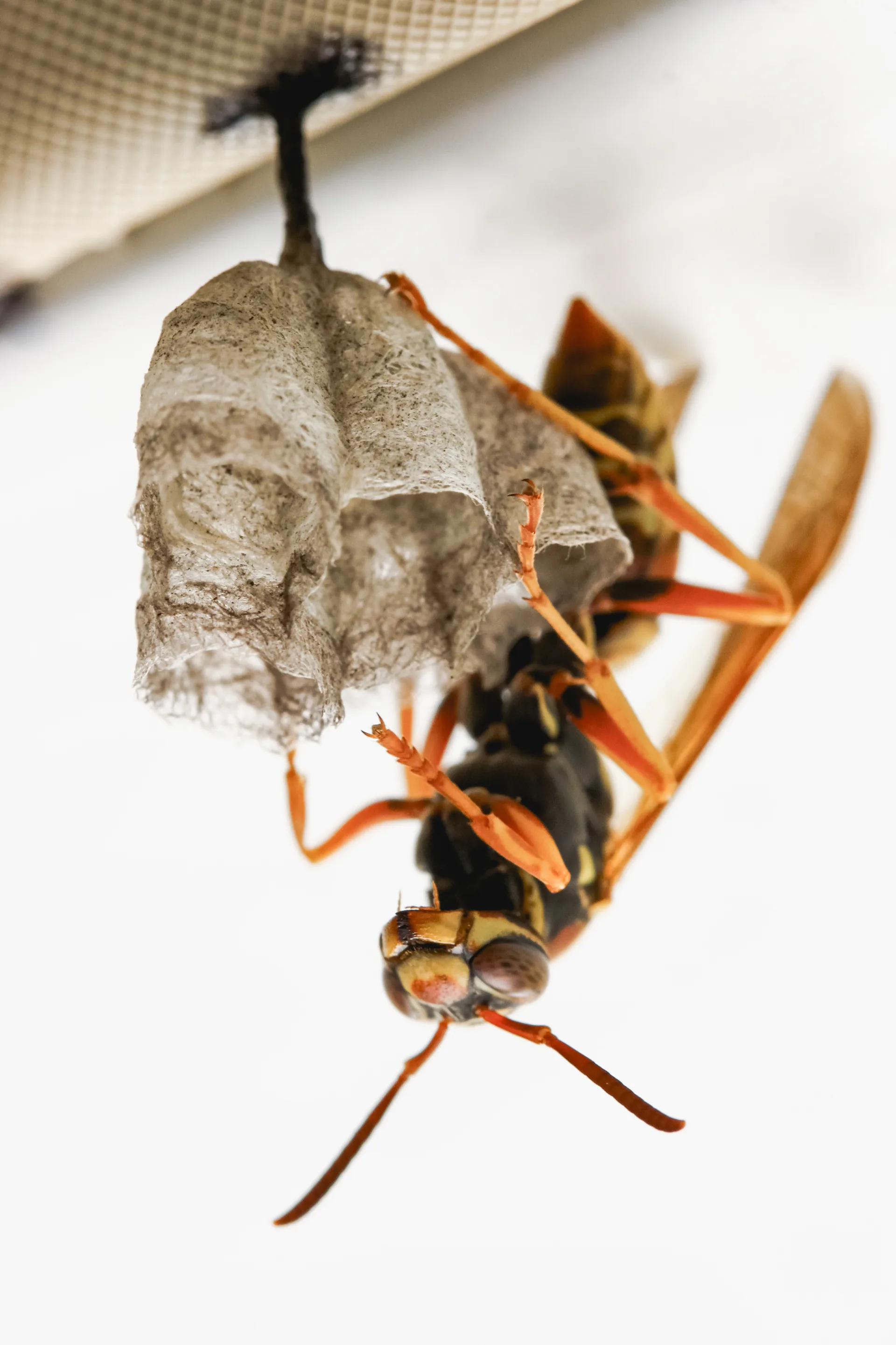
Paper wasps (Polistes fuscatus) build the open, umbrella-shaped nests commonly found under eaves, on porch ceilings, behind shutters, and in sheltered exterior locations throughout Toronto's residential neighbourhoods. While less aggressive than yellow jackets when their nest is not directly threatened, paper wasps will sting readily if the nest is disturbed during maintenance activities such as painting, gutter cleaning, or landscaping. Their nests grow rapidly from spring through late summer.
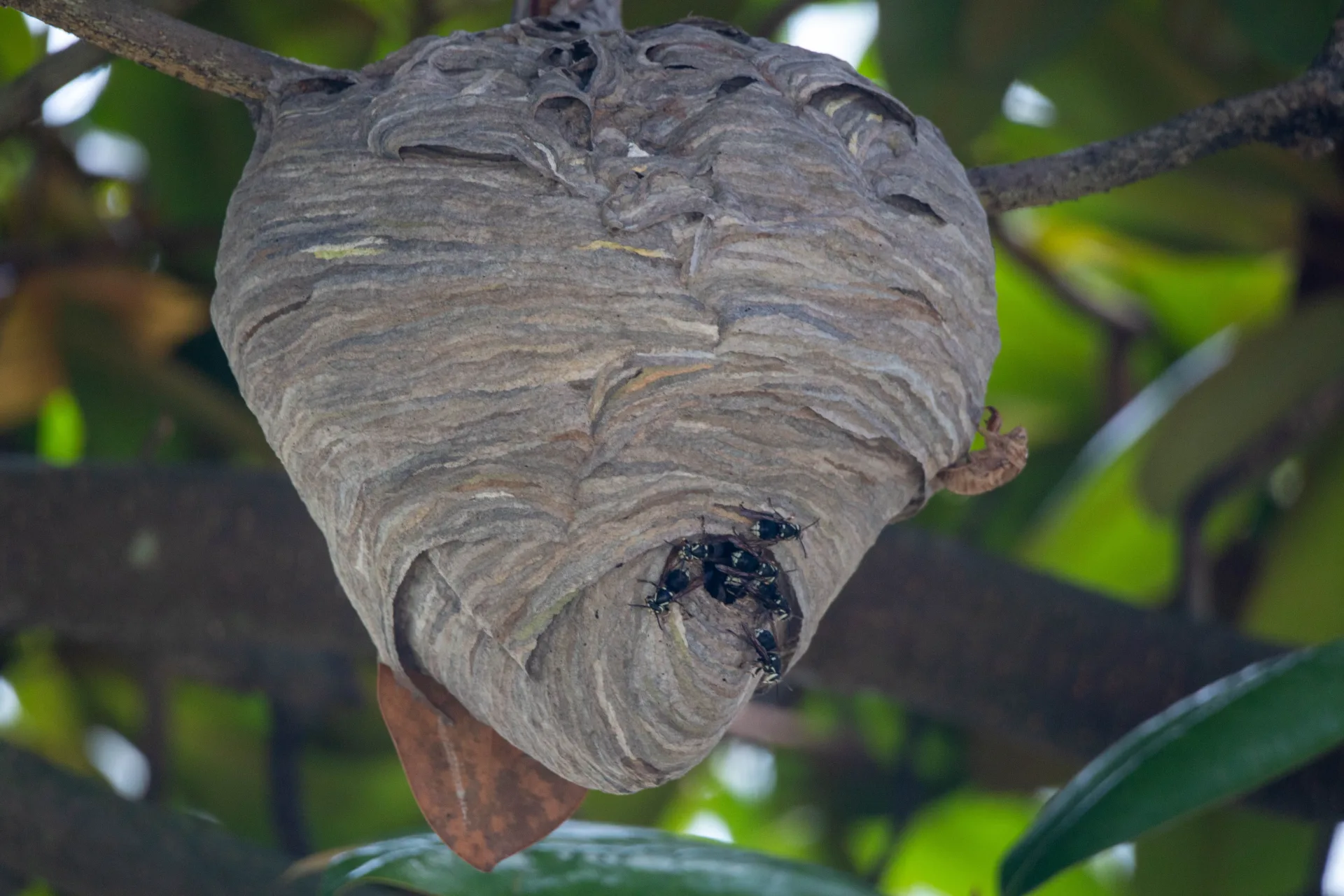
Bald-faced hornets (Dolichovespula maculata) construct large, enclosed paper nests in trees and on building exteriors in Toronto's heavily treed neighbourhoods — Forest Hill, Rosedale, High Park, and Sunnybrook area. These hornets are highly aggressive in defence of their nests and can sting multiple times. Toronto receives calls for bald-faced hornet removal throughout summer as nests become large enough to be noticed and present a sting risk to people using the area below or near the nest tree.
Wasp stings pose a potentially life-threatening risk to individuals with venom allergies. According to Health Canada, an estimated 3% of the Canadian population has a venom allergy with the potential for anaphylaxis, a life-threatening immune reaction requiring emergency intervention. Even individuals who have never reacted to previous stings can develop anaphylaxis upon subsequent stings. Professional removal eliminates this risk from your property.
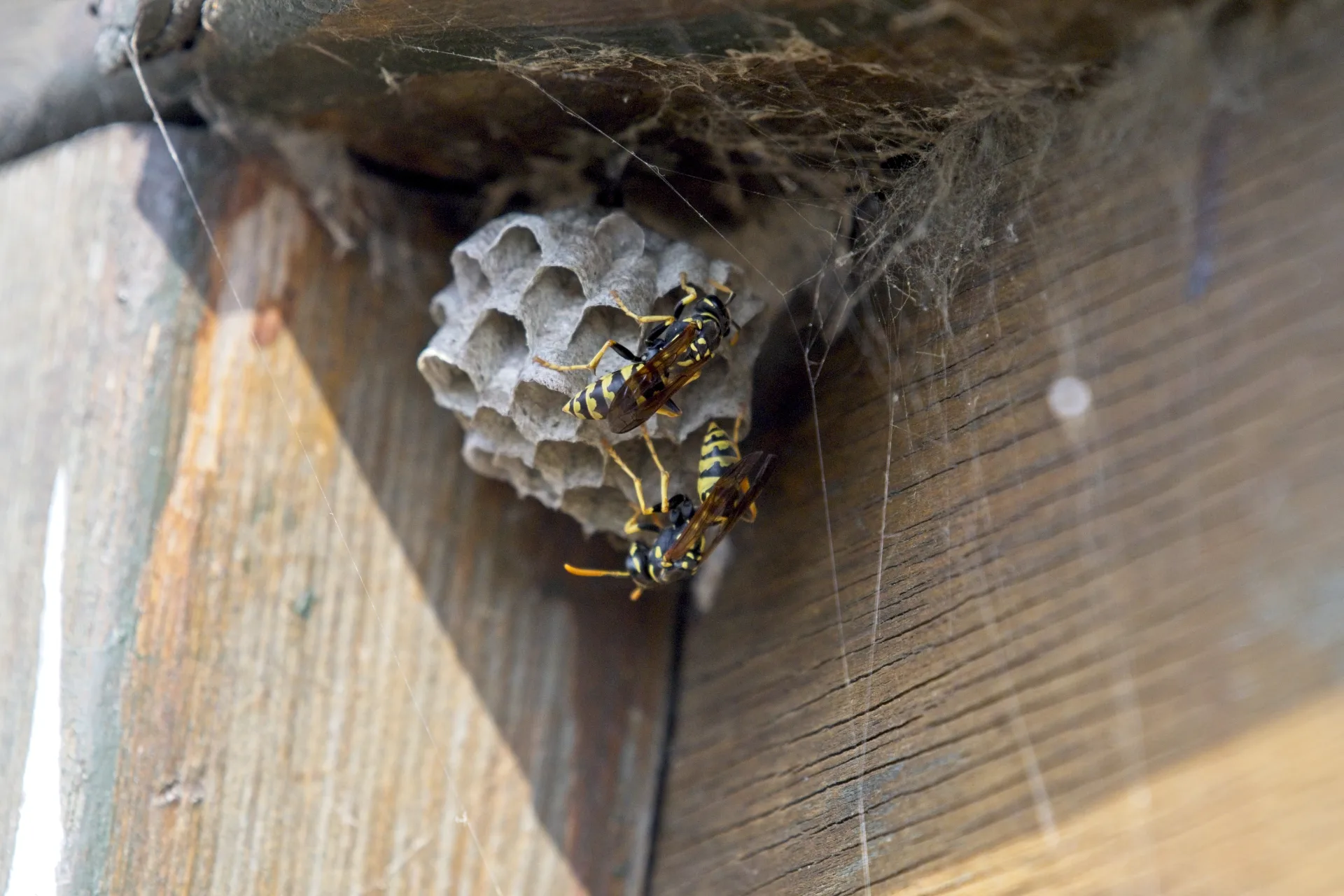
Why Professional Wasp Nest Removal Is the Only Safe Option
DIY wasp nest removal is one of the most dangerous activities homeowners attempt, and every year Toronto emergency departments treat severe sting reactions and anaphylaxis cases resulting from amateur nest disturbance. The fundamental problem is that social wasps release alarm pheromones when threatened that trigger coordinated mass attack behaviour from the entire colony. A 5,000-worker yellow jacket colony responding to a disturbance event can deliver hundreds of stings within seconds — far beyond the capacity of retail aerosol sprays to stop once alarm behaviour has been triggered.
Professional wasp nest removal involves treating the nest with a registered dust or liquid insecticide applied via extension lance equipment that allows treatment from a safe distance without provoking alarm response. For wall void or ground nests, specialized dust injectors deliver insecticide directly into the nest cavity without direct nest disturbance. The treatment eliminates the colony within 24–48 hours, after which the nest can be safely approached and removed if desired.
Ontario's Pesticides Act regulates the use of commercial-grade contact and residual insecticides for wasp control, restricting several product classes to licensed applicators. Bugsway technicians hold current Ontario pesticide applicator licences and carry full protective equipment including full bee suits, gloves, and face protection for all wasp removal work. Our technicians have treated thousands of wasp nests across Toronto's diverse building and landscape types and have the species-specific knowledge to select the safest and most effective approach for each situation.
For epipen-carrying or venom-allergic residents, Bugsway provides priority booking for wasp nest removal calls — same-day response wherever possible. Protecting medically vulnerable household members from active wasp nest hazards is one of the most genuinely urgent services we provide, and we treat it as such.
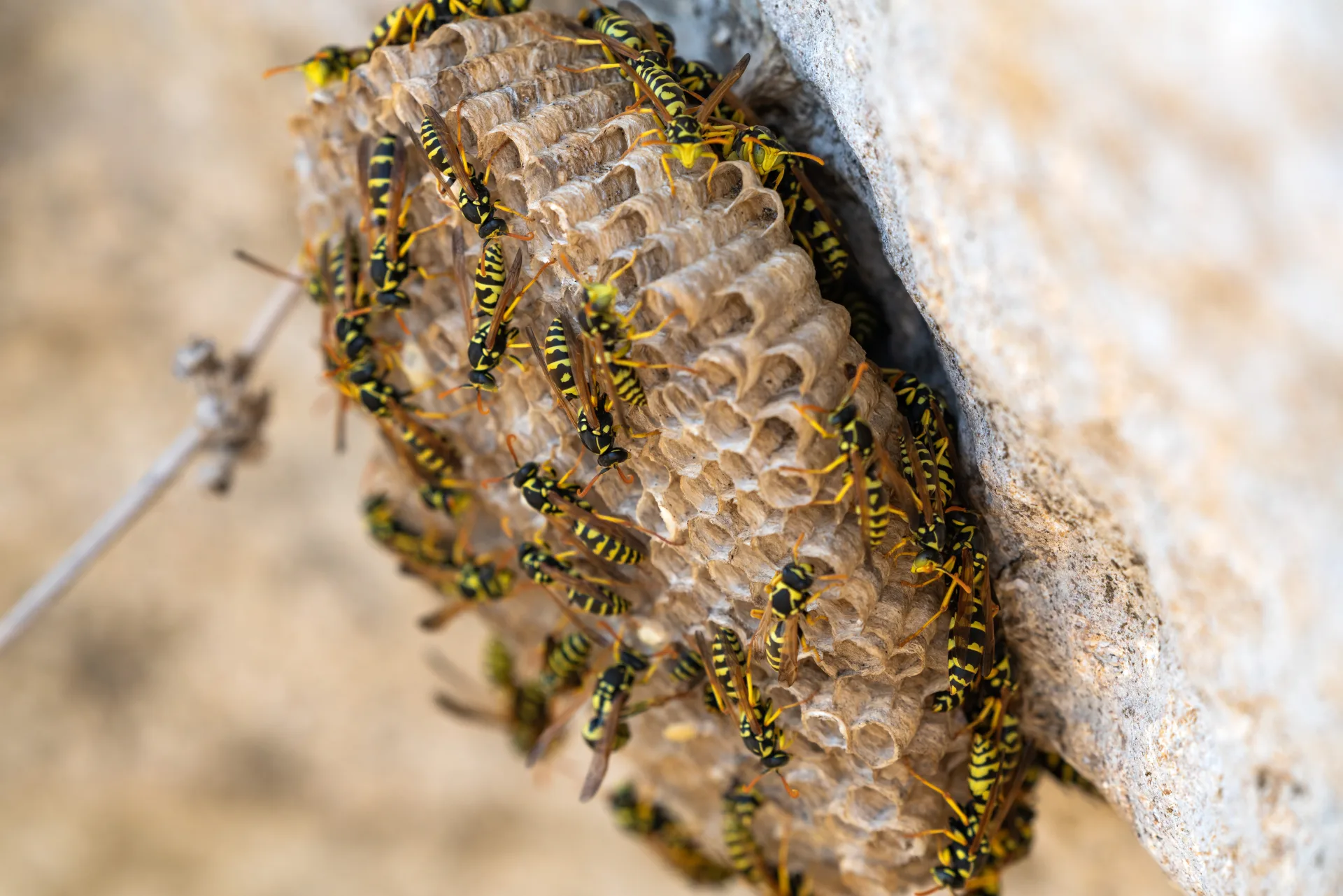
What's Included in Our Wasp Nest Removal Service
Species Identification
Confirmation of wasp species (yellow jacket, paper wasp, bald-faced hornet) to determine appropriate treatment product and application method.
Safe-Distance Nest Treatment
Registered insecticide applied via extension equipment allowing effective treatment from a safe distance without provoking colony alarm response.
Wall Void & Cavity Treatment
Specialized insecticide dust injection for yellow jacket nests in wall voids, attic spaces, and ground cavities — delivered directly into the nest without structural disassembly.
Nest Physical Removal
Physical removal of accessible nests (eaves, porch ceilings, exterior surfaces) after colony elimination, preventing attraction of secondary insect pests.
Entry Point Advice
Written documentation of the building gap or opening that enabled nest establishment, with recommendations for sealing to prevent future nesting in the same location.
30-Day Guarantee
If wasp activity returns at the same nest site within 30 days of treatment, we return for a complimentary follow-up treatment.
Wasp Nest on Your Property? Don't Risk a Sting.
Bugsway provides same-day wasp nest removal across all Toronto and GTA communities. Professional, safe, guaranteed.
Our Wasp Nest Removal Process — Step by Step
Step 1 — Site Assessment: The technician assesses the nest location, species, access requirements, and proximity to foot traffic areas. This determines the treatment approach, appropriate protective equipment level, and any safety perimeter required for bystanders during treatment.
Step 2 — Protective Equipment Setup: Full bee suit, gloves, and face protection are donned before any approach to the nest. Bystanders including household members and pets are directed to remain inside or at a safe distance during treatment. Neighbours adjacent to the treatment zone are advised to remain indoors if the nest is near a shared fence or boundary.
Step 3 — Insecticide Application: Registered insecticide dust or liquid is applied directly to the nest or nest entry point using extension equipment. For accessible exterior nests, the product is applied to the nest entrance and visible nest surface. For wall void or ground nests, the product is injected via a long dust applicator probe into the nest cavity through the identified entry point, ensuring the product reaches the nest interior where the colony resides.
Step 4 — Colony Die-Off Period: After treatment, activity at the nest typically increases for 15–30 minutes as returning foragers encounter the treated entrance, then decreases dramatically over 4–24 hours as the insecticide takes effect. Complete colony die-off is typically confirmed within 24–48 hours. We advise all household members to avoid the nest area during this period.
Step 5 — Nest Removal & Documentation: After confirming colony elimination (typically by confirming no flying activity at the nest for at least 2 hours), accessible nests are physically removed and bagged for disposal. Wall void nests are left in place. A written service report is provided documenting nest location, species, treatment applied, and the 30-day guarantee start date.
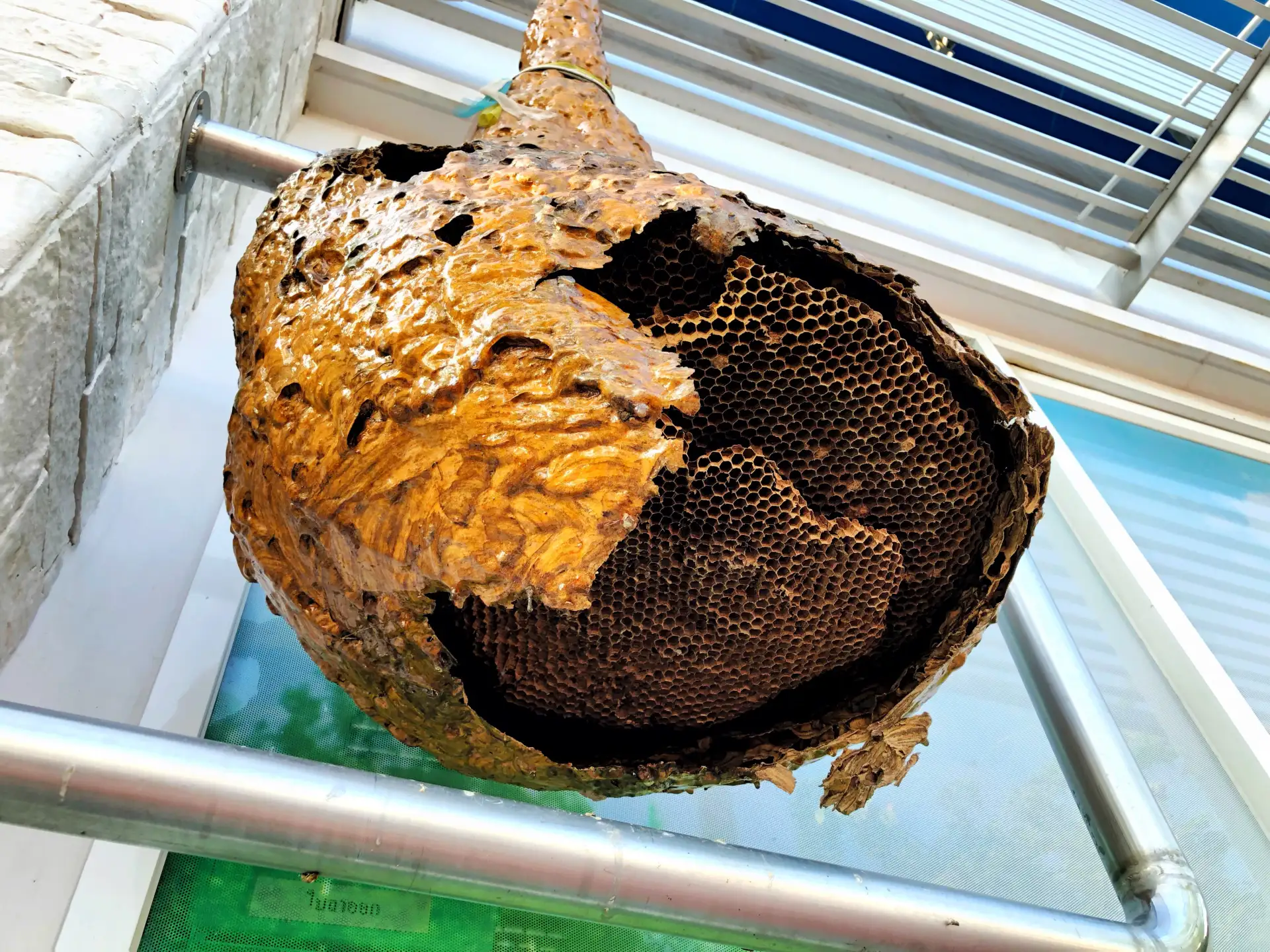
Wasp Nest Removal Pricing in Toronto
Flat-rate pricing based on nest type and access. All prices include HST and 30-day guarantee.
Single accessible exterior nest (eaves, porch)
- Species identification
- Insecticide treatment
- Nest physical removal
- 30-day guarantee
Wall void, attic, or ground nest — full treatment
- Everything in Standard
- Cavity/void injection
- Entry point sealing advice
- 30-day guarantee
Why Toronto Chooses Bugsway for Wasp Nest Removal
Wasp nest removal is one of our most frequently requested services from May through October, and Bugsway has established same-day service as a standard offering for wasp and stinging insect calls across Toronto and the GTA. We understand that a wasp nest near a children's play area, a main entry door, or an outdoor dining space is not a problem that can wait a week for a scheduled appointment — it requires immediate attention.
Our technicians bring species-specific knowledge to every call. Yellow jacket wall void nests require a different approach than paper wasp nests under eaves, which are different again from bald-faced hornet nests in tree canopy. Getting the species right, the product right, and the application method right is what separates effective treatment from a dangerous failed attempt. Bugsway's training programme includes regular species identification and technique reviews to keep our team current with best practices.
We also distinguish wasps from bees — and this distinction matters enormously. If you have a honey bee swarm or colony rather than wasps, we will identify it correctly and refer you to our bee relocation service rather than treating honey bees with insecticide. Protecting bee populations is important, and a company that treats every stinging insect call the same way is not one you want at your property.
Explore our complete wasp and bee removal services, including hornet control for bald-faced hornet infestations.
Don't Let Wasps Take Over Your Summer
Same-day wasp nest removal available across Toronto and the GTA. Call now or book online for immediate service.
Related Wasp & Bee Services
Bee Relocation
Ethical honey bee swarm and colony relocation to protect pollinators while safely removing hives from your property.
Learn MoreHornet Control
Professional bald-faced hornet and European hornet nest elimination from Toronto trees, buildings, and landscapes.
Learn MoreAll Wasp & Bee Services
Browse Bugsway's complete stinging insect management programme for Toronto homes and businesses.
View AllWasp Nest Removal — Frequently Asked Questions
What types of wasps are common in Toronto?
The most common wasp species in Toronto are yellow jackets (Vespula spp.), paper wasps (Polistes fuscatus), and bald-faced hornets (Dolichovespula maculata). Yellow jackets are the most frequently encountered, building nests in ground cavities, wall voids, and attics and are responsible for the majority of sting incidents. Paper wasps build open umbrella-shaped nests on eaves. Bald-faced hornets build large enclosed nests in trees and on building exteriors.
When is wasp season in Toronto?
Wasp season in Toronto runs from late April through October. Colonies grow rapidly through summer, reaching peak populations of 5,000–15,000 workers by August and September — the most dangerous time of year for stings. Colonies die off naturally with the first frosts, though nests in heated wall voids may persist into late fall. New queens overwinter and start new colonies each spring.
Is it safe to remove a wasp nest myself?
No. DIY wasp nest removal is one of the most dangerous pest control activities a homeowner can attempt. A disturbed yellow jacket colony can mobilize thousands of aggressive stinging workers within seconds. Anaphylactic reactions to wasp stings send hundreds of Canadians to emergency rooms each year. Professional removal with appropriate protective equipment and registered insecticides should always be used.
Do I need to remove the physical nest after treatment?
Not always. Treated nests in accessible exterior locations can be removed by our technician after the colony is eliminated. Nests in wall voids or attics are typically left in place as removal would require structural disassembly. Dead nests left inside walls pose no health risk and will not attract future colonies — new queens select new sites each spring, not reuse old nests.
How long does wasp nest treatment take?
Treatment of an accessible exterior wasp nest takes 20–40 minutes including protective equipment setup, insecticide application, and documentation. Wall void or attic nest treatments take 40–60 minutes. Colony die-off is typically complete within 24–48 hours of treatment, after which the nest is no longer active.
Can wasps build nests inside my walls?
Yes. Yellow jackets commonly nest in wall voids, accessing them through small gaps in exterior cladding, weep holes, or gaps around utility entries. Interior wall nests are identified by concentrated wasp traffic at a specific entry point on the exterior wall. They are particularly dangerous because wasps can chew through drywall and emerge inside the living space if the colony is large and the wall is close to interior spaces.
What happens if a wasp nest is left untreated?
If left untreated through summer, a yellow jacket colony can grow to 10,000–15,000 workers by September. These large late-season colonies are highly aggressive, especially when food sources decline. Wall void nests may result in wasps emerging inside the building. Untreated nests also attract secondary pests including carpet beetles and other insects that feed on dead wasps and nest material in autumn.
How do I prevent wasps from nesting on my property?
Prevention involves sealing potential nesting sites in spring: caulk gaps in exterior cladding, screen roof vents, cover utility entry points, and remove old nest material from previous years. Decoy paper nests hung in early spring can discourage queen wasps from establishing new colonies, as queens avoid areas with existing colonies. Our technician can advise on specific prevention measures during the service visit.
Wasp Nest Development: From Golf Ball to Basketball
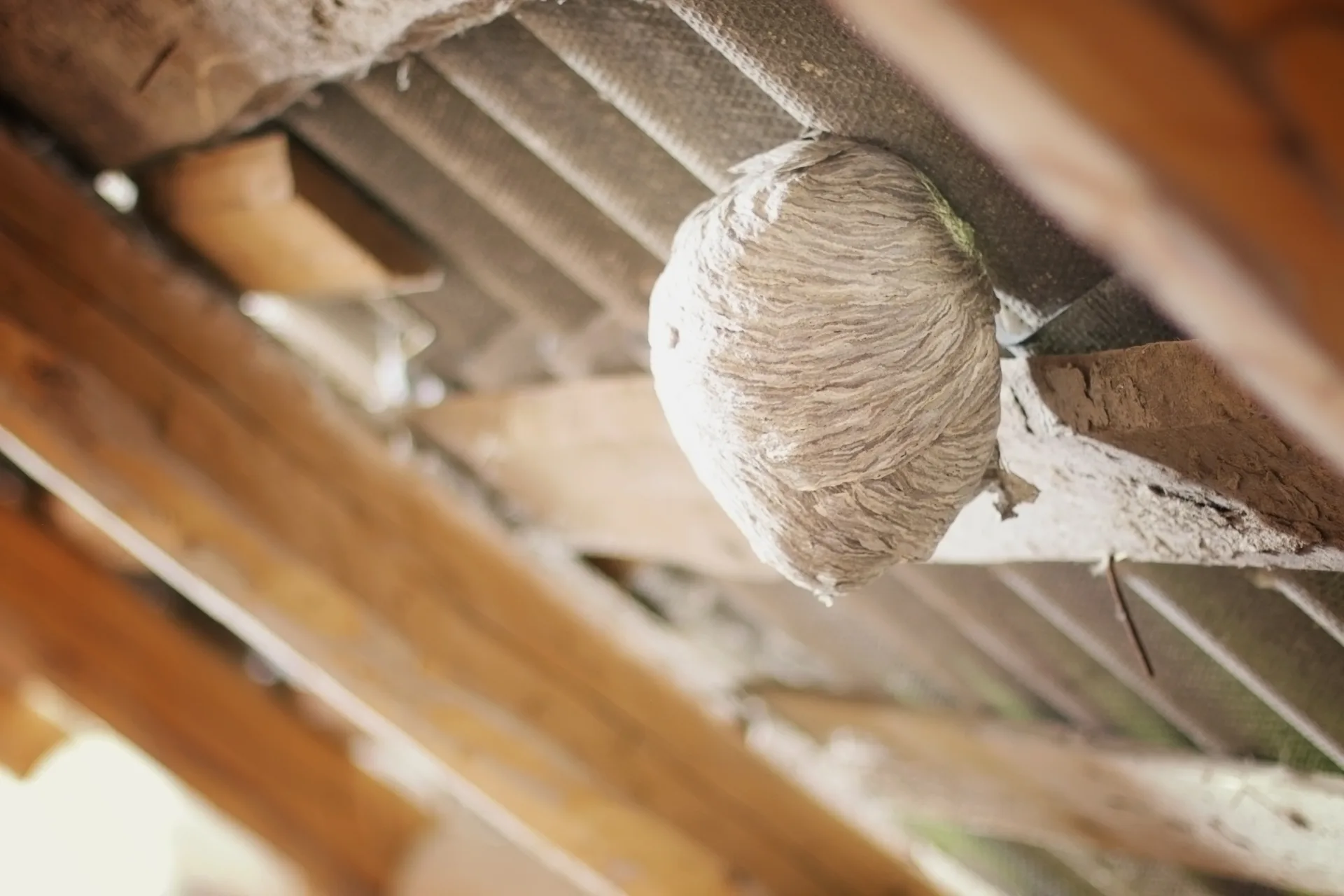
Understanding the seasonal development of wasp colonies helps explain why early treatment is so much safer and less expensive than late-summer treatment. In Toronto, yellow jacket and paper wasp queens emerge from overwintering sites in April-May and begin building small starter nests — the size of a golf ball or smaller, containing only the queen and initial brood. May and June nests have a few dozen workers at most and present minimal safety risk to treat. By July, worker populations grow to hundreds; by August, a yellow jacket colony reaches maximum size of 1,000-3,000 workers for common yellow jacket species, or up to 10,000 for the ground-nesting Vespula squamosa and V. germanica varieties found in Toronto.
Late-summer treatment (August-September) requires greater protective equipment, more insecticide, and involves higher risk because the worker population is at maximum and highly defensive. Costs reflect this — a small May nest costs $120-$180 to remove; a large August ground nest costs $200-$350+. After September, wasp colonies begin to die off naturally as new queens leave to overwinter and workers die. By October, most visible paper wasp nests are inactive and can be safely removed without insecticide. However, yellow jacket nests in wall voids may remain active until November in mild years. Don't assume a nest is inactive because leaves are falling — confirm with a Bugsway inspection.
Ground Wasp Nests: The Most Dangerous Type
Ground-nesting yellow jacket colonies are the most dangerous wasp problem encountered in Toronto-area residential properties. The nest entrance — a small hole in the soil, often in a retaining wall, under a deck, or in an overgrown lawn area — is easily stumbled upon during mowing, gardening, or children's play. Unlike visible paper nests under eaves (where the nest is obvious and can be avoided), ground nests are invisible until disturbed. Mature ground colonies (July-September) may contain 3,000-10,000 workers who mobilize instantly when the entrance is disturbed. Ground nest stings are the most common cause of severe wasp sting incidents requiring emergency medical care.
Treatment of ground yellow jacket nests requires applying insecticide dust directly into the nest entrance at night or very early morning (before sunrise) when workers are inside the nest and cold-slowed. The dust is carried back through the nest tunnels by workers, treating the entire underground gallery system. A second treatment 5-7 days later addresses any workers that were foraging during the first treatment and have since returned. The entrance is sealed with fine gravel after the second treatment confirms no remaining activity. Bugsway always treats ground nests in personal protective equipment — never approach a suspected ground nest without full coverage.
Preventing Wasps From Nesting in Your Property
Preventing annual wasp nest establishment requires denying access to the structural features that queens seek for nest sites in spring. Common nesting sites that can be proofed include: open soffit vents (install fine mesh covers), gaps in fascia and soffit where boards have separated, holes in exterior cladding or brick mortar, hollow spaces in decorative exterior trim, gaps around exterior light fixture mounting, open spaces inside outdoor barbecues (store with lid down or in a barbecue cover), and ground-level openings into retaining walls. Bugsway's annual spring inspection (conducted in April before queens begin nest construction) identifies and seals these sites before the season begins.
Fake wasp nests (commercially available decoys designed to mimic paper wasp nests) have limited effectiveness — their deterrent effect, if any, applies only to paper wasps and does not affect yellow jackets. Food sources near outdoor eating areas (open garbage bins, uncovered recycling, sweet drinks and fallen fruit) attract yellow jacket workers who forage at sweet and protein sources from mid-summer onward. Using garbage bins with secure lids, cleaning up fallen fruit promptly, and using wasp traps (sugar-water traps) in late summer near outdoor seating areas reduces wasp annoyance. However, traps do not reduce colony size significantly — only treating the nest provides reliable control.
Frequently Asked Questions
Questions? Call 416-555-5555
Should I remove a wasp nest after the wasps are dead?
Do fake wasp nests work to deter wasps?
Do wasps return to a removed nest?
How do I tell if a wasp nest is inactive?
Do wasps build nests inside walls?
What attracts wasps to my yard?
Do vinegar or other home remedies work against wasps?
Are wasps actually beneficial insects?
Book Wasp Nest Removal Today
Same-day service available across Toronto, Scarborough, North York, Etobicoke, Mississauga, Brampton, Markham, and all GTA communities.